
Last updated September 10, 2026
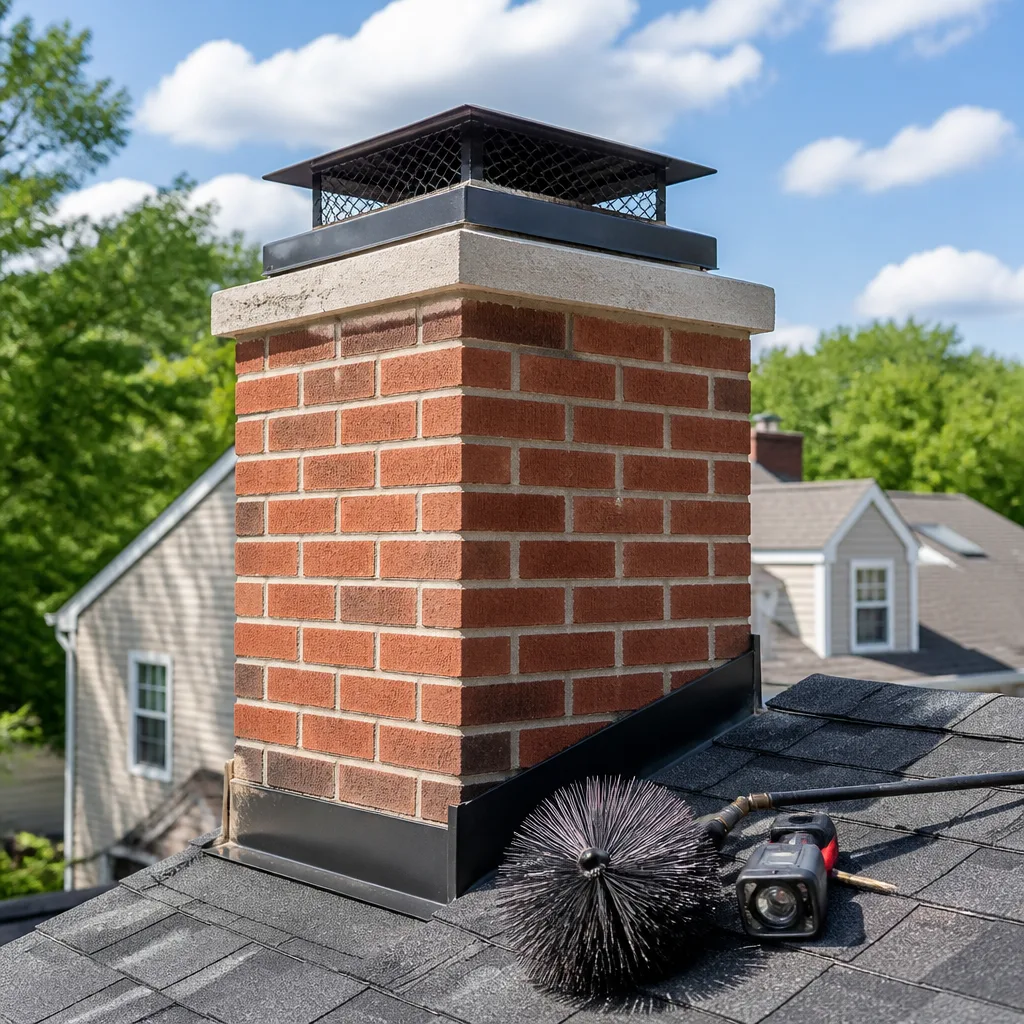
Level 1 sweep and inspection to the NFPA 211 annual standard - flue, crown, cap, and flashing checked and photographed
Chimney sweep logs do not sweep chimneys. They loosen some creosote - which then falls where a brush and vacuum still have to collect it.
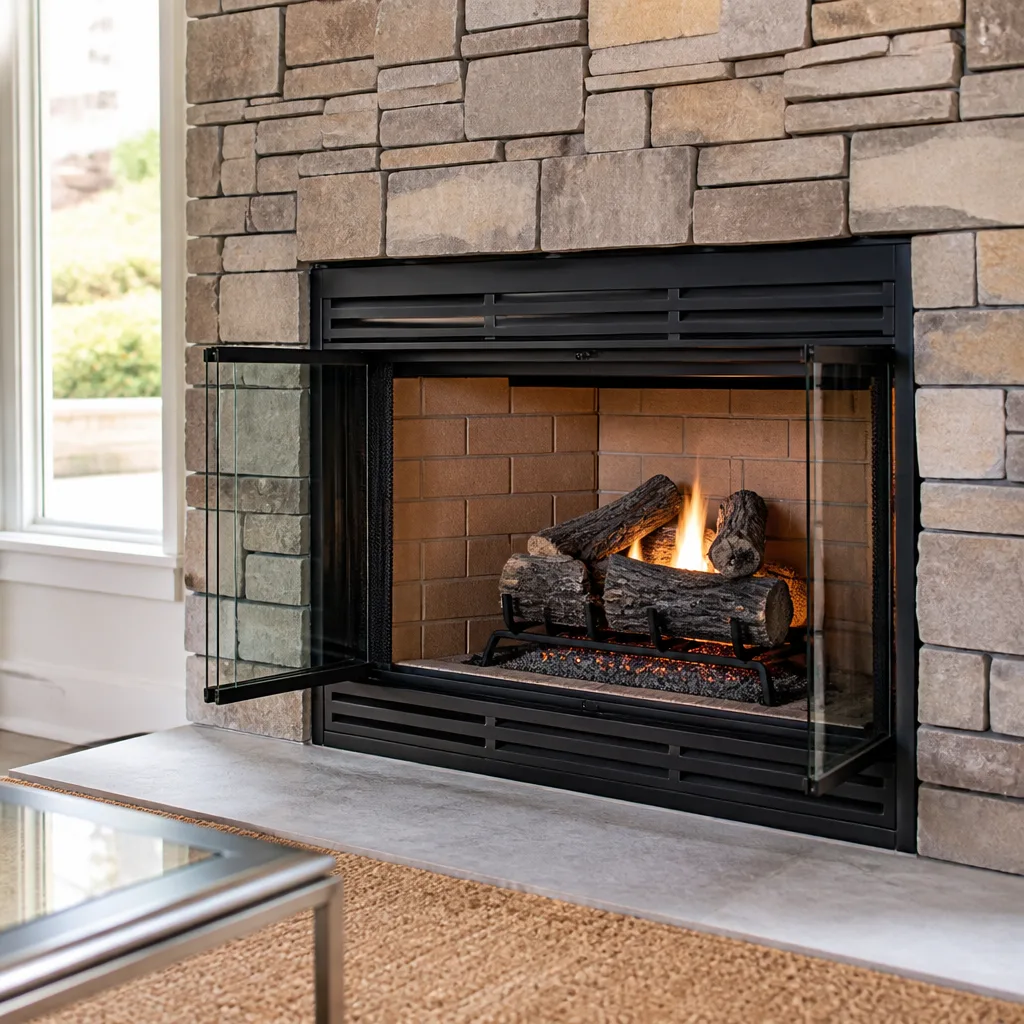
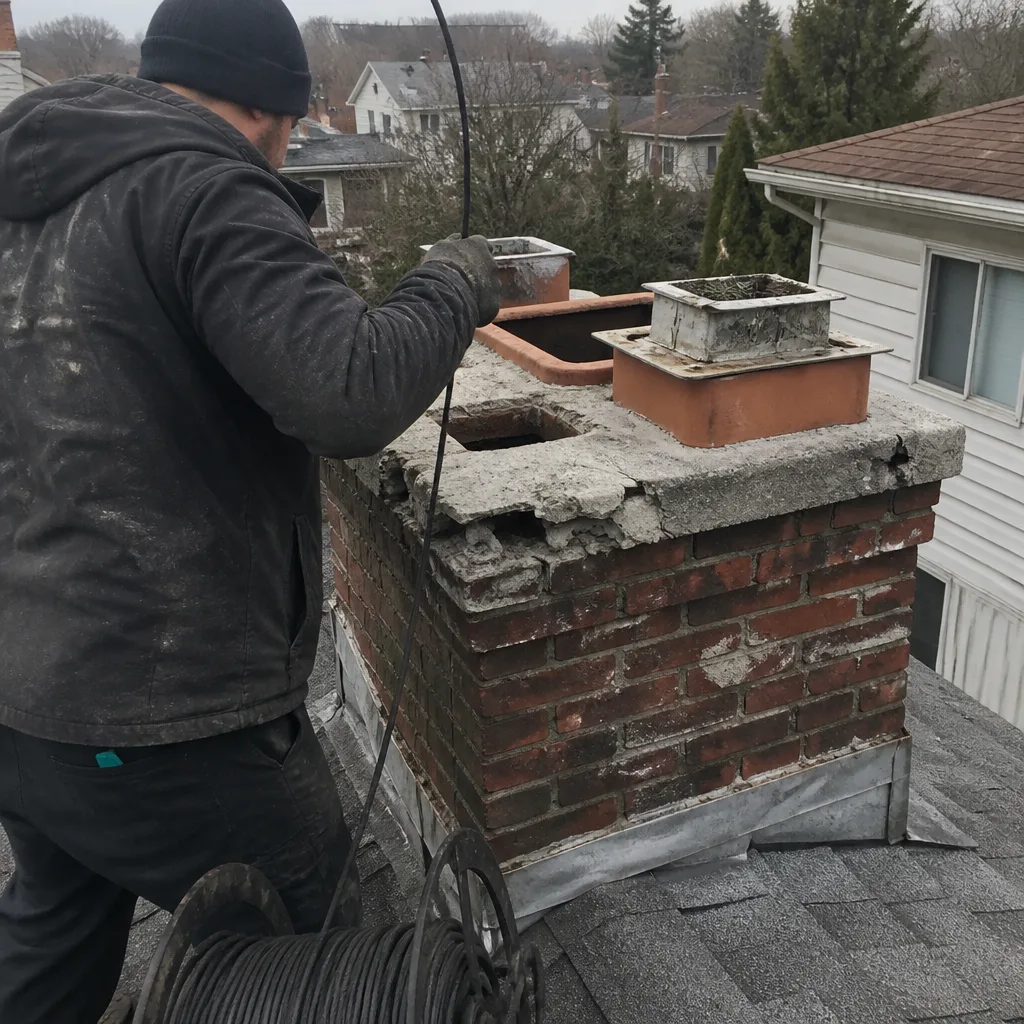 Before
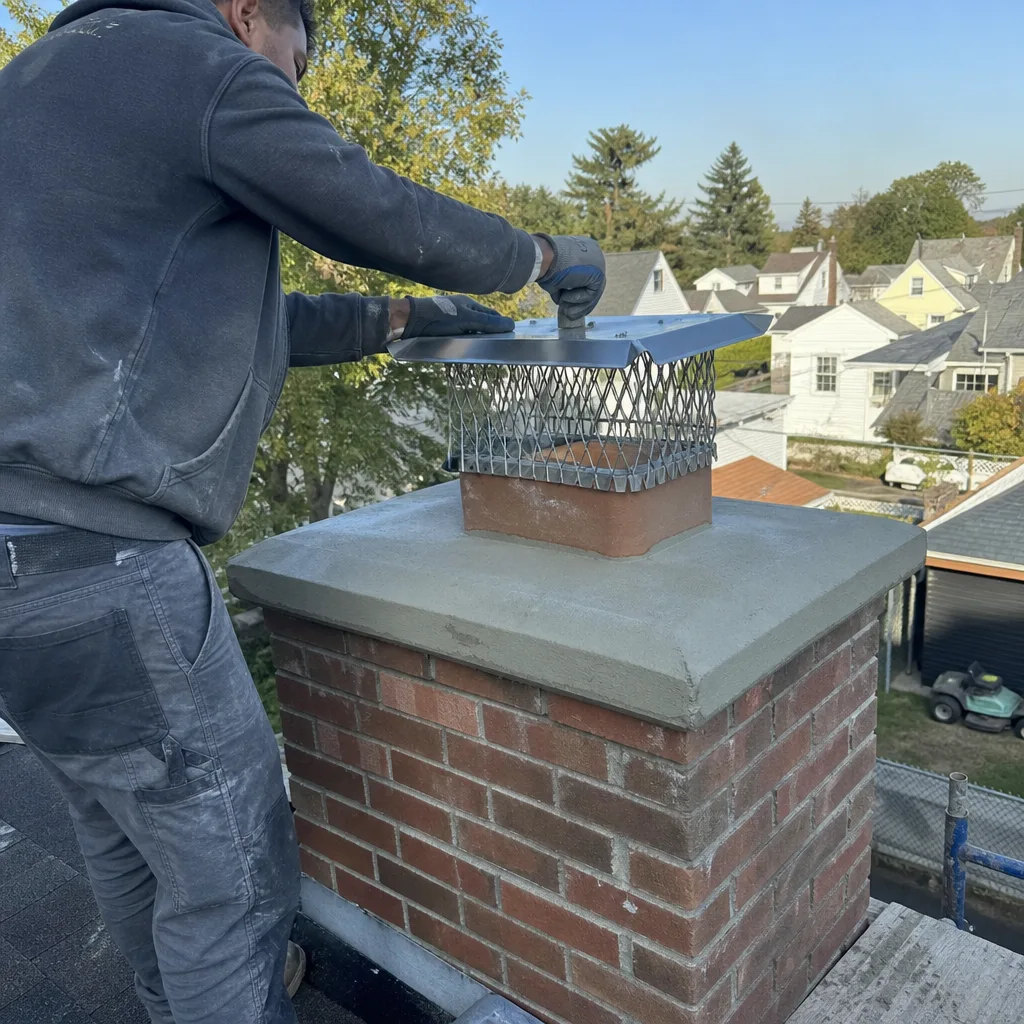 After
After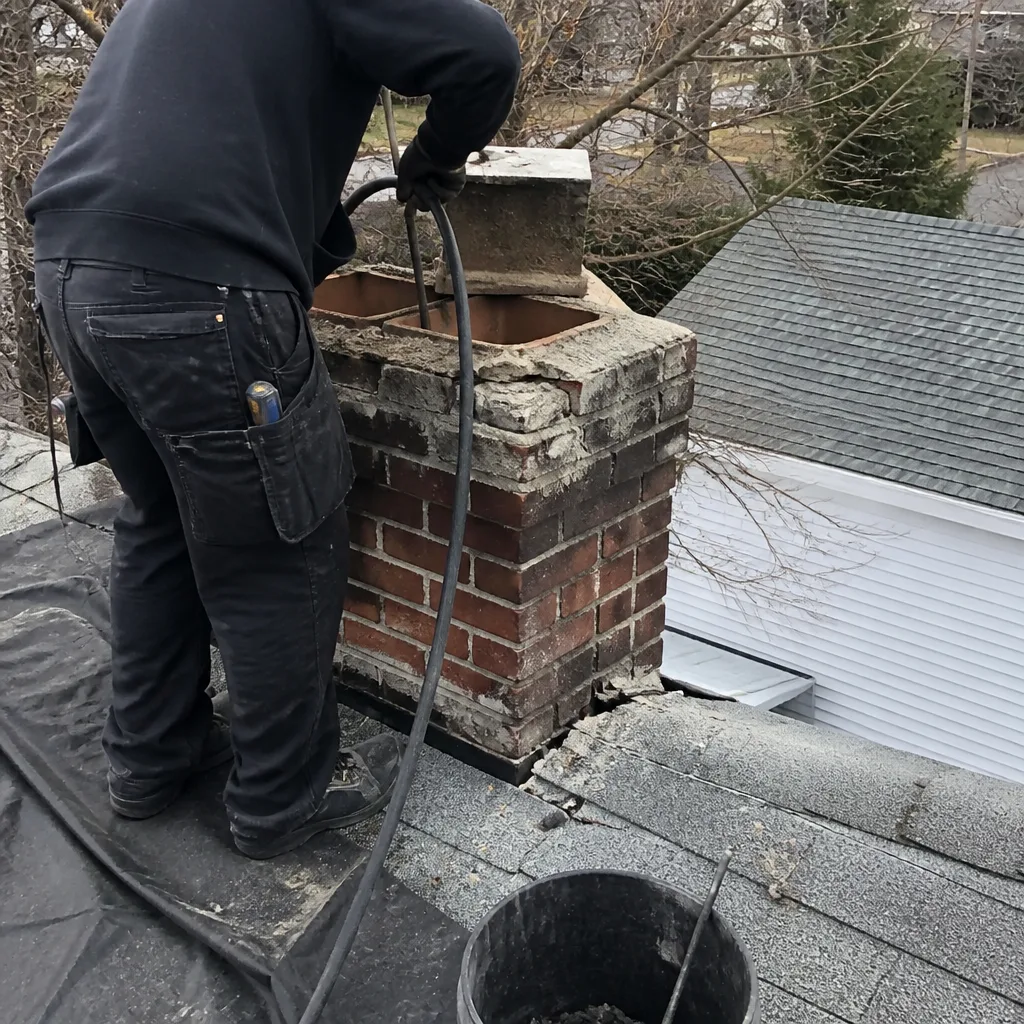 Before
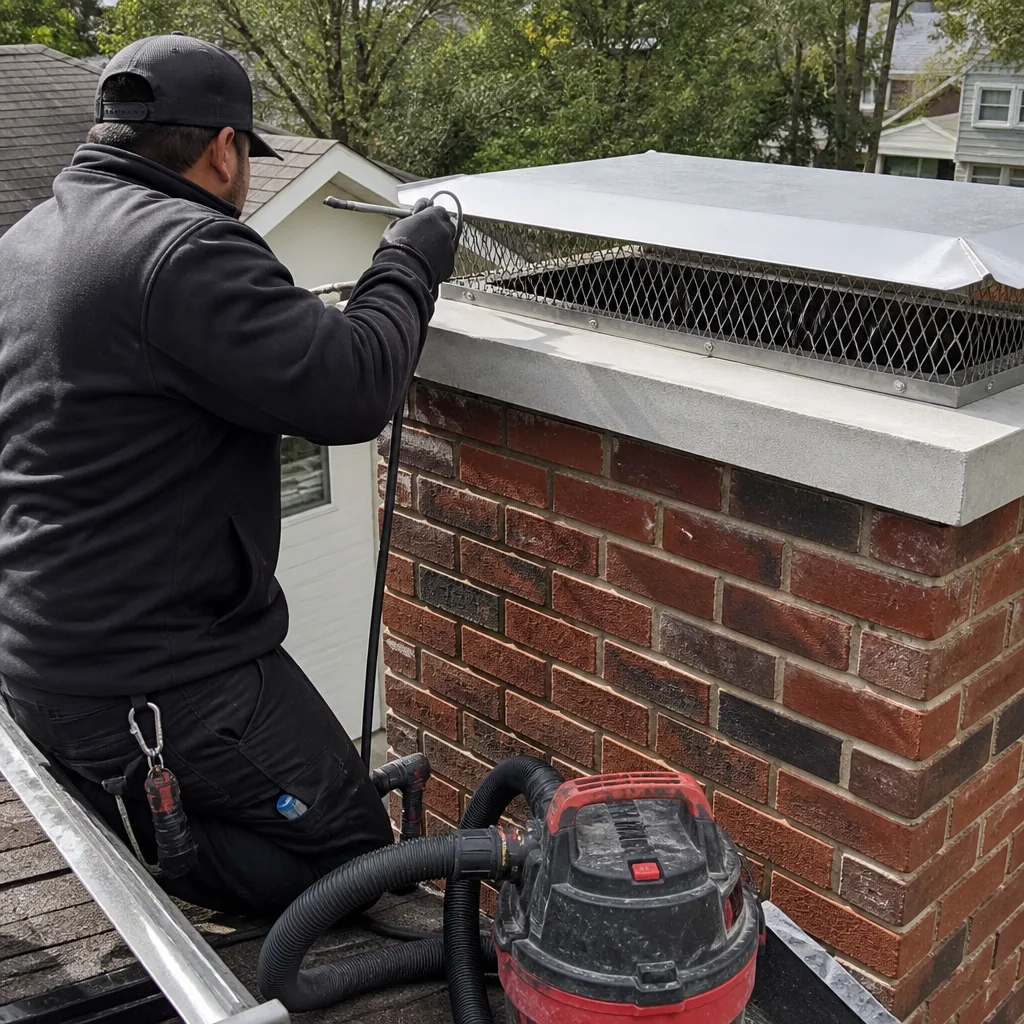 After
After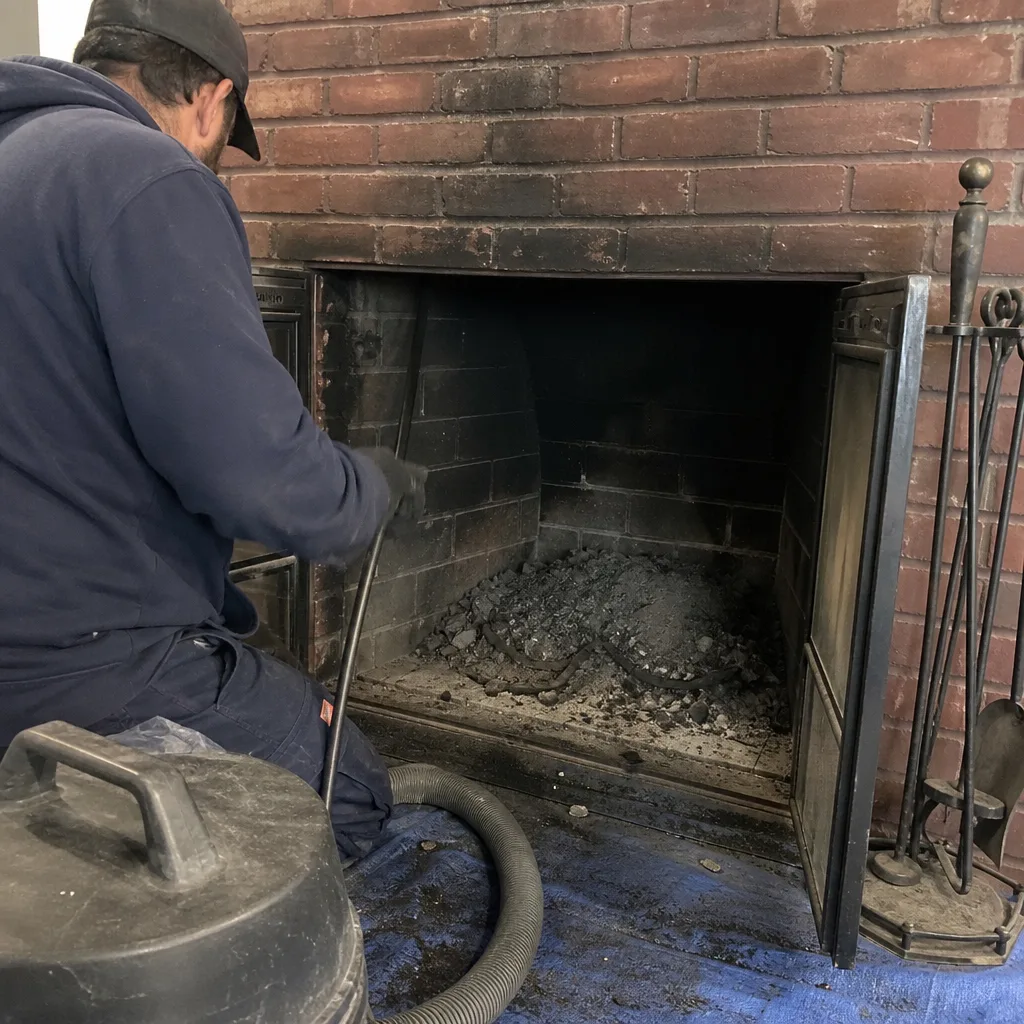 Before
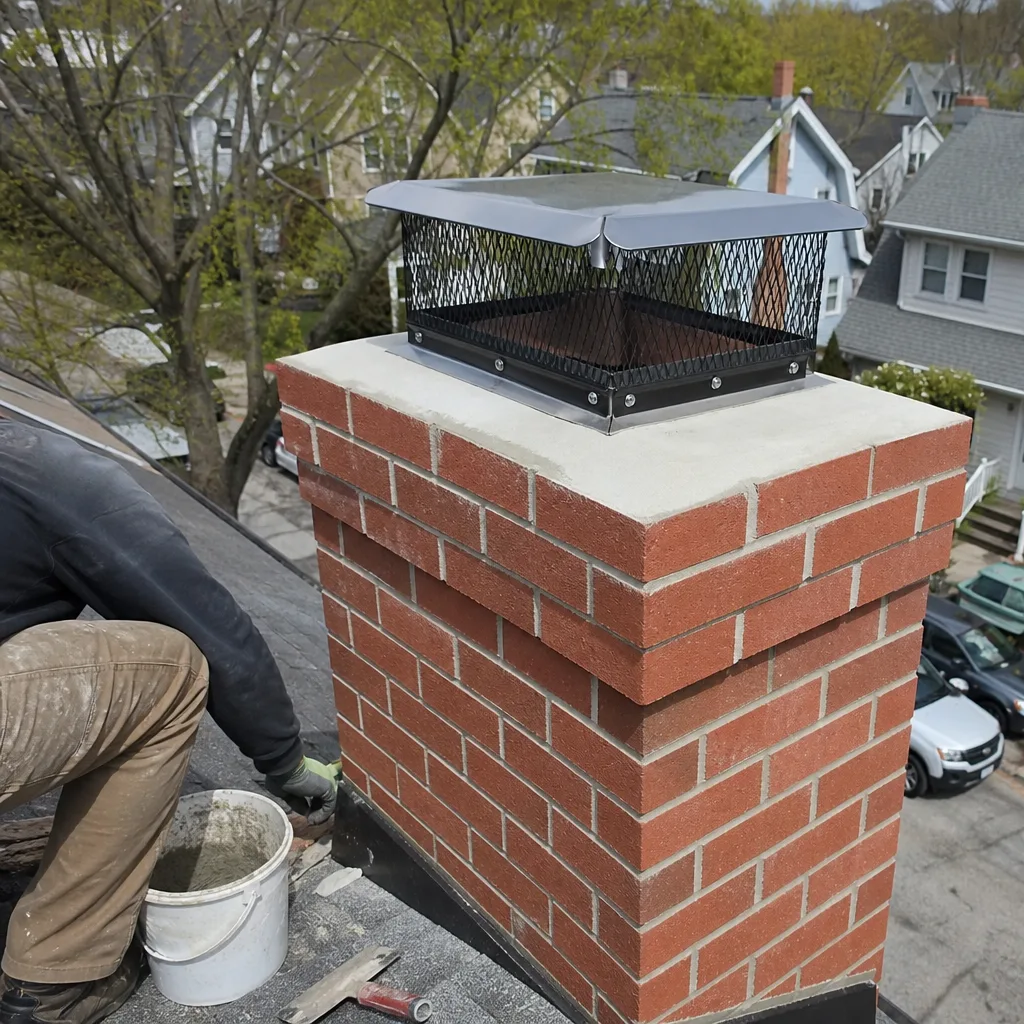 After
AfterChimney Cleaning Warning Signs: A Flushing Homeowner’s Reference Guide
Creosote-fueled chimney fires burn at over 2,000°F - hot enough to crack clay tile liners and ignite adjacent framing. They sometimes sound like a low roar or a jet engine, but in about half of cases, homeowners hear nothing and only discover the damage during the next inspection. In Flushing, where many homes were built before 1960 and have seen decades of winter use, the warning signs are usually there if you know where to look. This guide gives each sign a plain-English name, explains what causes it, and tells you whether it means “schedule a sweep soon” or “stop using this fireplace today.” For more guides & resources, visit our blog.
Quick Answer
The seven most common chimney cleaning warning signs are: smoke backing up into the room, a persistent fireplace odor (especially in summer), visible creosote buildup thicker than 1/8 inch, white or green staining on exterior masonry, rust on the damper or firebox, debris or animal nesting in the flue, and pieces of tile or brick in the firebox. If you smell gas, see flames coming from anywhere other than the firebox, or notice your carbon monoxide detector alarming, evacuate immediately and call emergency services before calling a sweep.
Table of Contents
- Where to Look: Inside the Firebox
- Where to Look: Exterior Masonry
- Where to Look: Inside the House
- Where to Look: Roofline and Crown
- The Fireplace Smell in Summer: What It Really Means
- Risk Tiers: Schedule Soon vs. Stop Today
- How to Describe Problems When You Call
- Common Mistakes to Avoid
- When to Call a Professional
- Frequently Asked Questions
- The Bottom Line
Where to Look: Inside the Firebox
The firebox is where warning signs are most visible and most often missed. Homeowners tend to look at the flames, not the walls. Here’s what we’ve learned from 42 years of chimney cleaning and sweep in Flushing - the problems start small and build where you’re not looking.
Thick, Shiny or Flaky Deposits on the Walls
Creosote comes in three stages. Stage one is soot - powdery, easy to remove. Stage two is crunchy, porous flakes. Stage three is the dangerous one: a hard, shiny, tar-like coating that can ignite at temperatures as low as 451°F. In Flushing, where many homeowners burn seasoned hardwood from Long Island suppliers, stage three creosote still develops when fires are smoldered overnight or when the damper is closed too early. Run a fireplace poker along the back wall above the lintel. If you scrape off a layer thicker than a dime, or if the surface looks like hardened black glass, that’s stage three. It cannot be removed with a brush alone. It requires a rotary cleaning system and chemical treatment, and it means your chimney has been operating outside safe parameters. Read The Complete Guide to Chimney Cleaning in Flushing for a full breakdown of methods.
Rust on the Damper or Firebox Floor
Rust means moisture, and moisture in a chimney system means something is wrong with the cap, crown, or flashing. A rusted damper will not seal properly, which costs you heated air in winter and allows humid summer air to accelerate creosote corrosion. In our experience inspecting Flushing homes near Kissena Park and the historic districts, dampers in pre-war brick chimneys often rust where the galvanized steel has been exposed to decades of acidic condensation. If you can see orange flaking when you shine a flashlight up from the firebox, the damper needs replacement, and the source of water entry needs diagnosis.
Spalling Brick or Crumbling Mortar
Spalling is when the face of a brick flakes off in curved pieces, exposing the softer interior. In the firebox, this happens when moisture penetrates from the outside and then expands during freeze-thaw cycles. Flushing’s climate delivers 25 to 30 freeze-thaw cycles per winter on average, enough to destroy a compromised firebox in two to three seasons. Crumbling mortar between firebricks is equally serious - it allows heat to reach combustible framing that should never see temperatures above 200°F. We’ve replaced fireboxes in Bowne Street colonials where the homeowner noticed “a few loose bricks” that turned out to be full-thickness gaps behind the wall.
Pieces of Clay Tile in the Ash Bed
Clay flue tiles line most chimneys built before 1980 in Flushing. When you find curved shards in the ashes, those tiles have cracked from thermal shock or chimney fire damage. A cracked liner allows heat, sparks, and combustion gases to reach the gap between flue and masonry. That gap is often filled with wood framing, insulation, or lath and plaster. This is not a “schedule soon” situation. Stop using the fireplace until a Level-2 camera inspection confirms liner integrity.
Smoke Stains Above the Fireplace Opening
Black or brown discoloration on the mantel or wall above the opening indicates smoke spillage. This can mean a flue that is too small for the fireplace, a blockage, or negative air pressure in the house. In Flushing’s tighter, energy-retrofitted homes, we’ve seen this problem increase as old windows get replaced and kitchen exhaust fans get more powerful. The chimney can’t pull against a house that’s depressurized. The stain is your visible proof that combustion gases are entering your living space.
Where to Look: Exterior Masonry
The outside of your chimney tells a different story than the inside. Where the firebox shows what’s happening now, the exterior shows what has been happening for years.
White or Green Staining (Efflorescence and Algae)
White, powdery staining on brick is efflorescence - mineral salts left behind when water moves through masonry and evaporates. It is common on new construction and usually harmless at first. But on a chimney that’s been standing for fifty years, new efflorescence means water has found a new path in. Green or black staining indicates algae or mold, which requires persistent moisture and poor drying conditions. In Flushing, where many chimneys are on the north side of buildings shaded by mature oaks and maples, green staining often appears on the northeast face first. The distinction matters: efflorescence alone might mean repointing and a new cap. Green staining with soft mortar suggests the crown has failed and water is saturating the masonry mass.
Missing or Cracked Mortar Joints
Repointing is not cosmetic maintenance. Open joints allow water to penetrate the wythes - the vertical layers of brick - and reach the interior. In freeze-thaw country, one winter can turn a 1/4-inch gap into a 2-inch spall. Walk around your property and look at the chimney from ground level, then from a second-story window if you have access. Joints should be recessed evenly, not crumbling or washed out. In the Murray Hill and Broadway-Flushing historic districts, we’ve found that lime mortar from the 1920s and 1930s has often been improperly repointed with Portland cement, which traps moisture and accelerates damage.
Leaning or Separated Chimney
A chimney that leans away from the house has a compromised foundation, deteriorated footing, or both. The gap between chimney and siding is a water funnel and a firestop failure. In Flushing’s clay-heavy soils, freeze-thaw heaving affects shallow footings. We’ve seen lean develop suddenly after a wet autumn followed by a hard freeze. This is structural work, not sweeping, but it often reveals itself when a homeowner calls us for what they thought was a routine cleaning.
Where to Look: Inside the House
Some warning signs appear nowhere near the chimney itself. Your nose, your eyes on the ceiling, and your carbon monoxide detector are all diagnostic tools.
The Summer Fireplace Smell
This deserves its own detailed section below, but as a location marker: if your living room smells like a campfire in July, that’s creosote odor being pulled down the flue by negative air pressure. It is not normal. It is not “just how old chimneys are.” It is a warning that your chimney has enough creosote load to produce detectable odor, and that your house’s air balance is reversed from what it should be.
Water Stains on the Ceiling Near the Chimney
Stains on plaster or drywall below the chimney chase indicate flashing failure, crown cracks, or deteriorated mortar allowing water to run down the interior. The stain shape matters: a broad, diffuse stain suggests cap or crown failure. A sharp line at the chimney-roof intersection means step flashing or counterflashing has separated. In Flushing’s dense housing stock, where many attics are finished or inaccessible, the first sign is often a stain on a second-floor bedroom ceiling. By then, the damage has been active for one to three years.
Excessive Soot in Furnace Rooms
If your chimney serves a furnace or boiler as well as a fireplace, check the connection point. Soot blowback at the thimble (where the vent pipe enters the chimney) indicates blocked flue, improper sizing, or a disconnected liner. Carbon monoxide risk is highest here because these appliances run unattended. We’ve responded to calls in Pomonok and Electchester where the homeowner noticed “a little black dust around the boiler” and found a fully blocked flue.
Draft Problems: Smoke, Slow Ignition, or Cold Air Down the Flue
A healthy chimney draws smoke up and out. If you light newspaper in the firebox and the smoke lingers or rolls forward, the flue is cold, blocked, or improperly sized. Cold air falling down the flue when no fire is lit indicates a failed damper seal or exterior air pressure imbalance. In Flushing’s multi-story homes with central staircases, the stack effect can reverse draft in lower-floor fireplaces while upper floors draw normally. This is fixable with proper damper function and sometimes a top-sealing damper from a manufacturer like Olympia Chimney or Famco.
Where to Look: Roofline and Crown
The crown is the concrete or mortar cap that seals the chimney top. It is not the same as the cap, which is the metal cover over the flue. Both fail, and both are visible from the ground with binoculars or from a second-floor window.
Crown Cracks and Deterioration
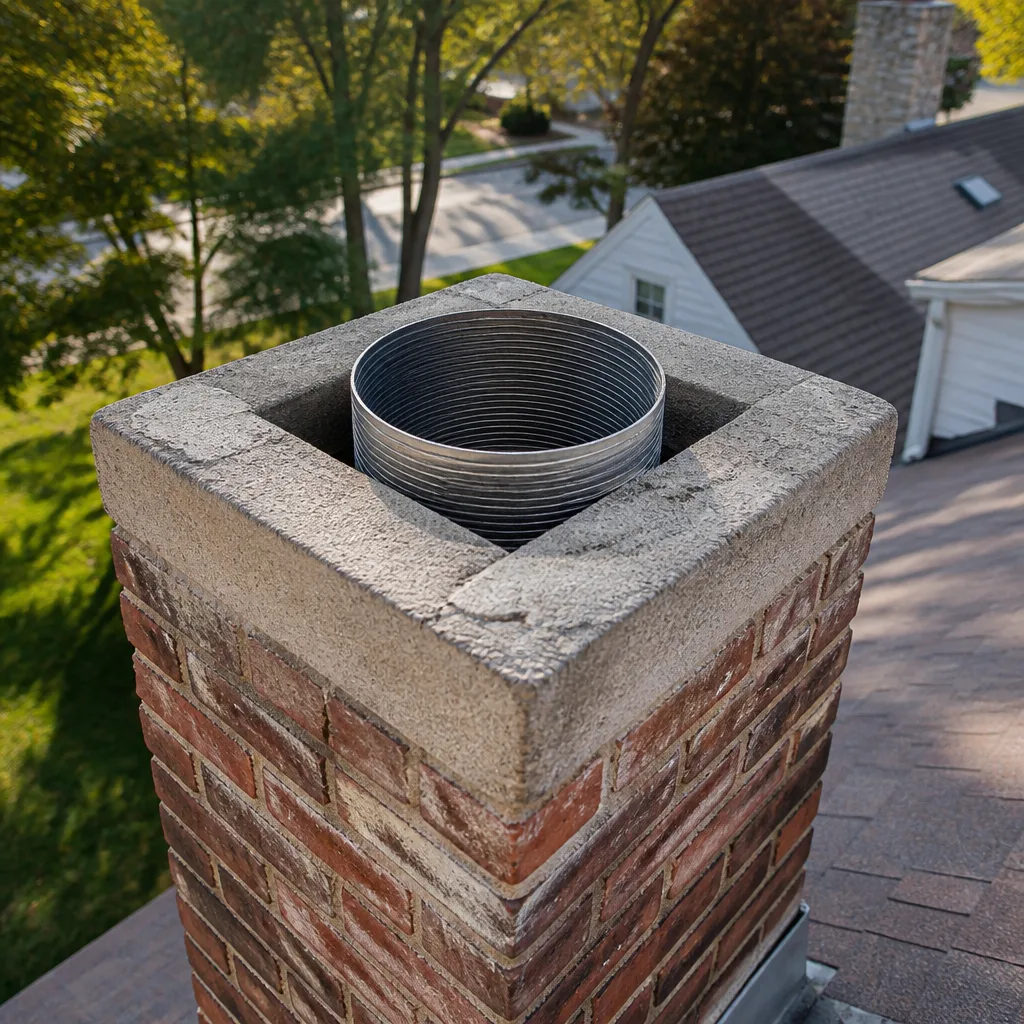
A proper crown overhangs the brick by at least 2 inches and has a drip edge underneath. It should slope away from the flue. Cracks wider than 1/8 inch allow water directly into the chimney core. We’ve found that many Flushing chimneys built between 1940 and 1970 were crowned with mortar rather than concrete, and that mortar crowns deteriorate to gravel in 15 to 20 years. If you can see exposed flue tile sticking up past a cracked surface, the crown has failed and water is entering with every rain.
Missing or Damaged Chimney Cap
The cap keeps rain, animals, and debris out of the flue. A missing cap means squirrels, raccoons, and starlings can nest. It means rain enters freely. It means sparks can exit onto your roof. In Flushing, where mature tree canopies overhang many roofs, caps also keep leaves and twigs from accumulating. We install caps from Copperfield and DuraFlex because their stainless construction outlasts the galvanized products sold at hardware stores by decades.
Flashing Separation at the Roof Line
Step flashing is woven into the shingles and runs up the chimney sides. Counterflashing is embedded in the mortar joints and folds down over the step flashing. When counterflashing pulls away, water runs behind both layers and into the structure. This is the most common cause of chimney-related interior water damage we see in Flushing. It is invisible from the street and often missed by general roof inspectors who don’t specialize in chimney systems.
The Fireplace Smell in Summer: What It Really Means
This is the warning sign most homeowners dismiss, and it is the one that tells you the most about your system.
When you smell fireplace in summer, two things are true simultaneously. First, your flue contains enough creosote to produce detectable odor. Clean chimneys don’t smell. Second, air is moving down the flue instead of up, carrying that odor into your living space.
The cause is negative air pressure. Modern homes are tighter than the chimneys that serve them. Central air conditioning, range hoods, and bathroom exhaust fans all pull air out of the house. Replacement air has to come from somewhere. If the chimney flue is the easiest path, it becomes an intake duct. In Flushing, where many homes have been weatherized with new windows, added insulation, and sealed doors, we’ve seen this problem increase dramatically over the past fifteen years.
The smell is not dangerous by itself. But it tells you that your chimney is dirty enough to smell, and that your home’s air balance is reversed. When heating season returns and you light a fire, that same negative pressure can pull smoke into the house. The solution is twofold: remove the odor source with a thorough sweep, and diagnose the pressure imbalance. See DIY vs Professional Chimney Cleaning: The Flushing Homeowner’s Decision Guide to weigh your options. Sometimes the fix is as simple as opening a window when the range hood runs. Sometimes it requires a dedicated outside air supply. We document both the creosote condition and the pressure dynamics during our Level-2 inspections, with photos you can see and a plain-English verdict.
Risk Tiers: Schedule Soon vs. Stop Today
Not every warning sign carries the same urgency. Here’s how we categorize them based on 42 years of calls in Flushing and surrounding Queens neighborhoods.
Schedule Within Two Weeks
- Stage one or two creosote visible during visual inspection
- Slight smoke spillage only at fire start-up
- White efflorescence without green staining or soft mortar
- Fireplace odor in summer without other symptoms
- Minor crown cracking without water entry evidence
These conditions allow continued use with increased vigilance. Book a sweep and inspection. Ask for camera documentation.
Schedule Within 48 Hours, Do Not Use Until Inspected
- Stage three glazed creosote
- Smoke spillage that persists throughout the burn
- Clay tile pieces in the firebox
- Rust on damper with visible water staining
- Visible debris or nesting material in the flue
- Carbon monoxide detector alarms during appliance operation
These conditions indicate active hazards. A blocked or damaged flue can cause carbon monoxide accumulation or chimney fire. The fireplace or appliance stays off until a professional clears and inspects the system.
Stop Immediately, Call Emergency Services if Applicable
- Flames or smoke visible from any part of the chimney exterior
- Loud roaring or rumbling from the chimney during a fire
- Strong gas odor (rotten egg smell) from fireplace or utility area
- Carbon monoxide detector alarm that does not reset
- Structural leaning or separation with visible gap
For flames or roaring from the chimney, evacuate and call 911. For gas odor, evacuate and call the fire department or gas utility emergency line. Call us after the immediate emergency is resolved for damage assessment and repair.
How to Describe Problems When You Call
The right description gets the right technician with the right equipment. Here’s what helps us help you.
- State the symptom, not your diagnosis. “Smoke comes into the room when the fire is established” is more useful than “I think the flue is too small.”
- Note the timing. “This started two weeks ago” versus “This has been getting worse for three winters” tells us whether we’re looking at sudden blockage or gradual deterioration.
- Describe the fuel and burning pattern. Seasoned hardwood burned hot and open is different from unseasoned wood smoldered overnight. The creosote formation differs, and so does the cleaning approach.
- Mention recent changes to the house. New windows, added insulation, a new range hood, or a renovated basement can all affect chimney performance.
- Know your chimney’s history if possible. Last sweep date, any known liner type, previous repairs. In Flushing’s older housing stock, even approximate decade of construction helps.
When you call Hearthstone Chimney Co., a live person answers 24 hours a day, 7 days a week. We’ll ask these questions, schedule appropriately, and send a technician equipped for what you’ve described. Most jobs are completed in a single visit with no-hassle upfront pricing.
Common Mistakes to Avoid
- Assuming a gas fireplace needs no maintenance. Gas inserts and logs produce corrosive condensation and can block vents with debris. Annual inspection is still required, and the burner orifice needs cleaning to prevent incomplete combustion.
- Using chimney cleaning logs as a substitute for sweeping. These products may loosen light creosote but cannot remove stage three buildup and do not inspect for liner damage or blockages. They are a supplement, not a replacement.
- Ignoring summer odor as “just how old houses smell.” In Flushing’s pre-war housing stock, we’ve heard this rationalization hundreds of times. The smell is diagnostic data. It means something measurable is wrong.
- Hiring based on the lowest coupon price. A $79 sweep that takes 20 minutes and leaves no documentation is not a bargain. It’s a missed opportunity to catch problems before they become expensive. We offer a $89 Seasonal Tune-Up that includes full inspection and documentation, and we stand behind it with the 90-Day Done Right Promise.
- Waiting for “burning season” to schedule. In Flushing, sweeps are busiest October through December. Schedule in spring or summer for better appointment availability and to address any needed repairs before the first cold night.
- Attempting to inspect or clean from the roof without proper equipment. Steep pitches, clay tile fragility, and the risk of falls make this genuinely dangerous. Our technicians are trained, equipped, and insured for roof work. This is not a homeowner task.
When to Call a Professional
Call a certified chimney professional when you observe any warning sign described in this guide, when your last inspection was more than twelve months ago, or when you’ve recently purchased a home and have no documentation of prior chimney condition. See How to Hire a Chimney Cleaning Contractor in Flushing: A Step-by-Step Guide for help choosing the right pro. In Flushing’s market, where homes often change hands without thorough disclosure, we’ve found that “recently serviced” frequently means “the seller ran a brush up once.”
Chimney repair in Flushing requires understanding local conditions: freeze-thaw cycles, clay soils, mature tree canopy, and housing stock that spans from 1890s frame construction to 1960s brick ranch. Hearthstone Chimney Co. offers free estimates in Flushing. Call (516) 206-6672. A live person answers every call, every hour, every day. We’ll schedule a Level-2 camera inspection, show you photos of what we find, and give you a plain-English verdict with upfront pricing before any work begins.
Frequently Asked Questions
A standard chimney sweep and Level-1 inspection in Flushing typically ranges from $199 to $349, depending on accessibility, creosote stage, and whether the system serves a fireplace, furnace, or both. Our $89 Seasonal Tune-Up is available during spring and summer months and includes full visual inspection. We provide no-hassle upfront pricing before any work begins, and the number on the estimate is the number on the invoice. Call (516) 206-6672 for an exact quote - estimates are free.
The National Fire Protection Association recommends annual inspection, with sweeping as needed based on creosote accumulation. In Flushing, where many homeowners burn two to four cords of hardwood per winter, we find that annual sweeping is typically necessary. Homes with gas inserts should still be inspected annually for vent blockages and burner condition. The 90-Day Done Right Promise backs every job we complete.
Clay tile flues are safe when intact and properly sized. They must be replaced when cracked, spalled, or when the flue is too large for the appliance served. We never recommend liner replacement without camera evidence you can see yourself. In many Flushing homes built before 1950, we’ve found clay tiles that are sound after 80 years, and we’ve found tiles that failed after one chimney fire. The inspection tells the truth. Call (516) 206-6672 to schedule camera documentation.
Skipped maintenance leads to progressive creosote accumulation, which increases chimney fire risk and reduces draft efficiency. Moisture entry causes masonry deterioration that accelerates exponentially once freeze-thaw damage begins. Carbon monoxide risk rises with blockages or liner failures. In Flushing’s housing market, deferred chimney maintenance is one of the most common sources of failed home inspections at sale, often requiring $3,000 to $8,000 in repairs that could have been prevented. Call (516) 206-6672 for a free estimate before small problems become large ones.
Rain-sourced odor indicates water mixing with creosote deposits in the flue, producing a concentrated, musty-smoke smell. It also suggests your chimney cap or crown is allowing water entry. The combination of water and creosote creates acidic compounds that accelerate liner and masonry deterioration. This is not normal and should be addressed with cap inspection, sweep, and moisture-source diagnosis. Call (516) 206-6672 to schedule.
Light, powdery soot (stage one creosote) allows continued use with scheduled sweeping. Glazed, tar-like deposits (stage three) mean stop using until professional cleaning. The 1/8-inch rule is a useful guideline: if you can scrape off a layer thicker than that, do not burn until swept. When uncertain, err toward inspection. Hearthstone Chimney Co. provides free estimates and documented verdicts so you can decide with full information. Call (516) 206-6672.
The Bottom Line
Chimney warning signs are not mysterious. They are visible, smellable, and predictable once you know what to look for. The smoke that lingers, the smell that returns in summer, the white stain that spreads on brick - each has a cause and a consequence if ignored. In Flushing’s older housing stock, where chimneys have served generations of families, maintenance is not an expense. It is the cost of continuing to use a system safely.
Document what you observe. Photograph stains and deposits. Note when problems started and what changed in your home. Then call a professional who will show you evidence, explain it plainly, and stand behind the work. That’s what we’ve done for over 42 years. Done right - and we stand behind it.
Written by Russell Haines, Owner at Hearthstone Chimney Co., serving Flushing since 2014.