
Last updated September 10, 2026
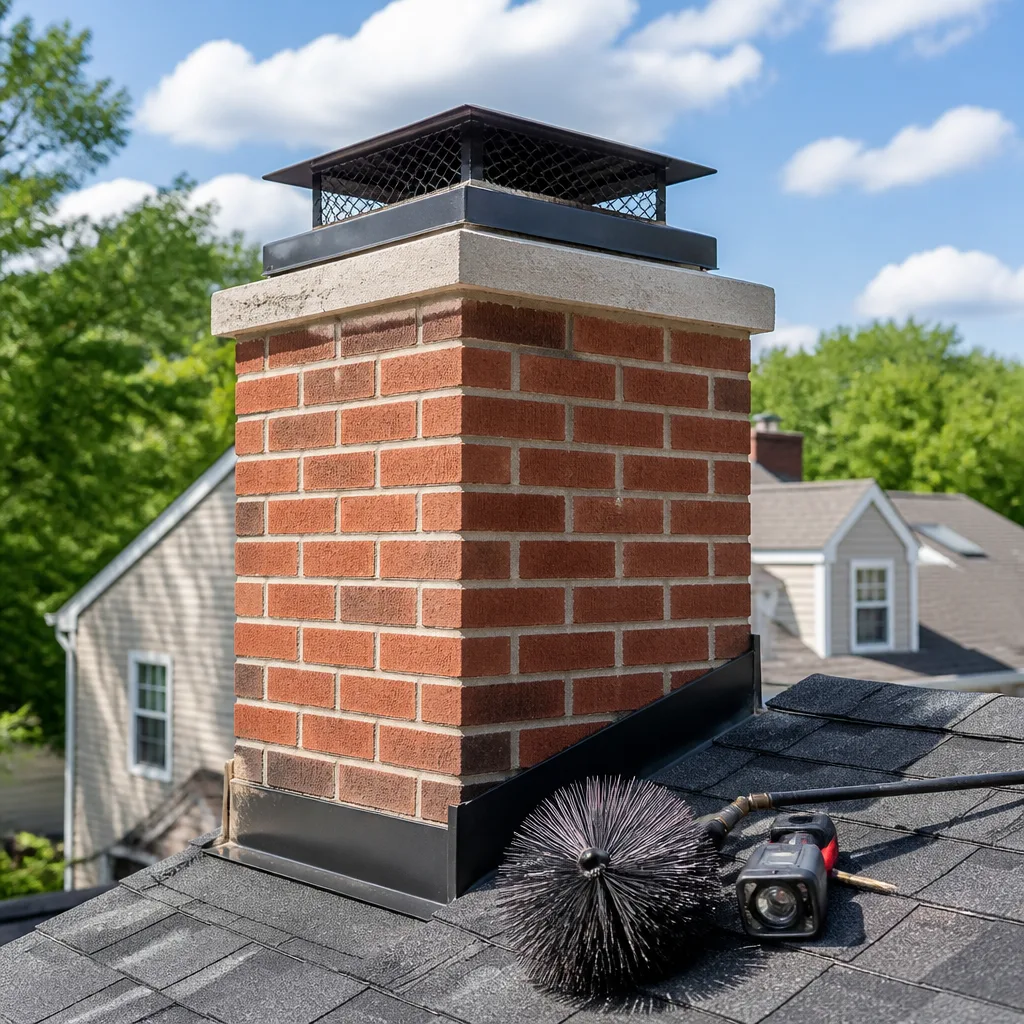
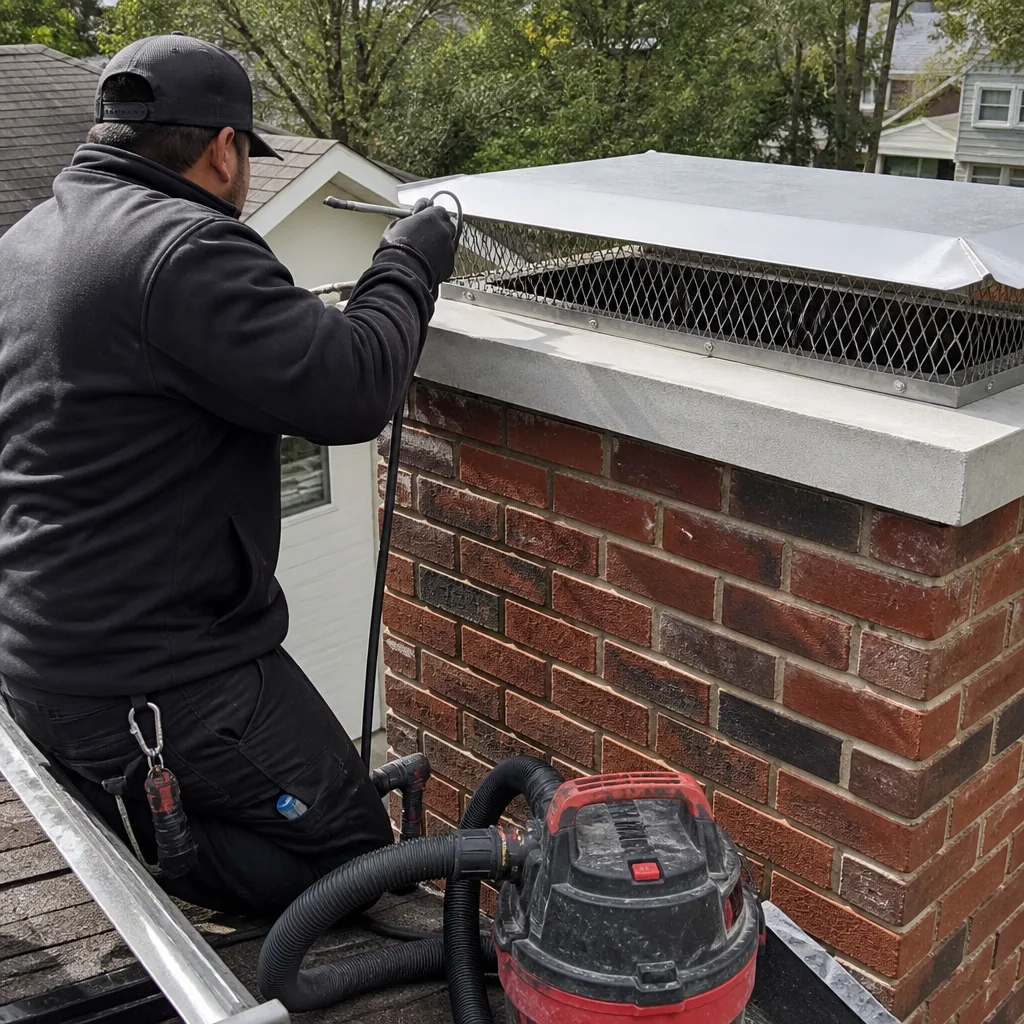
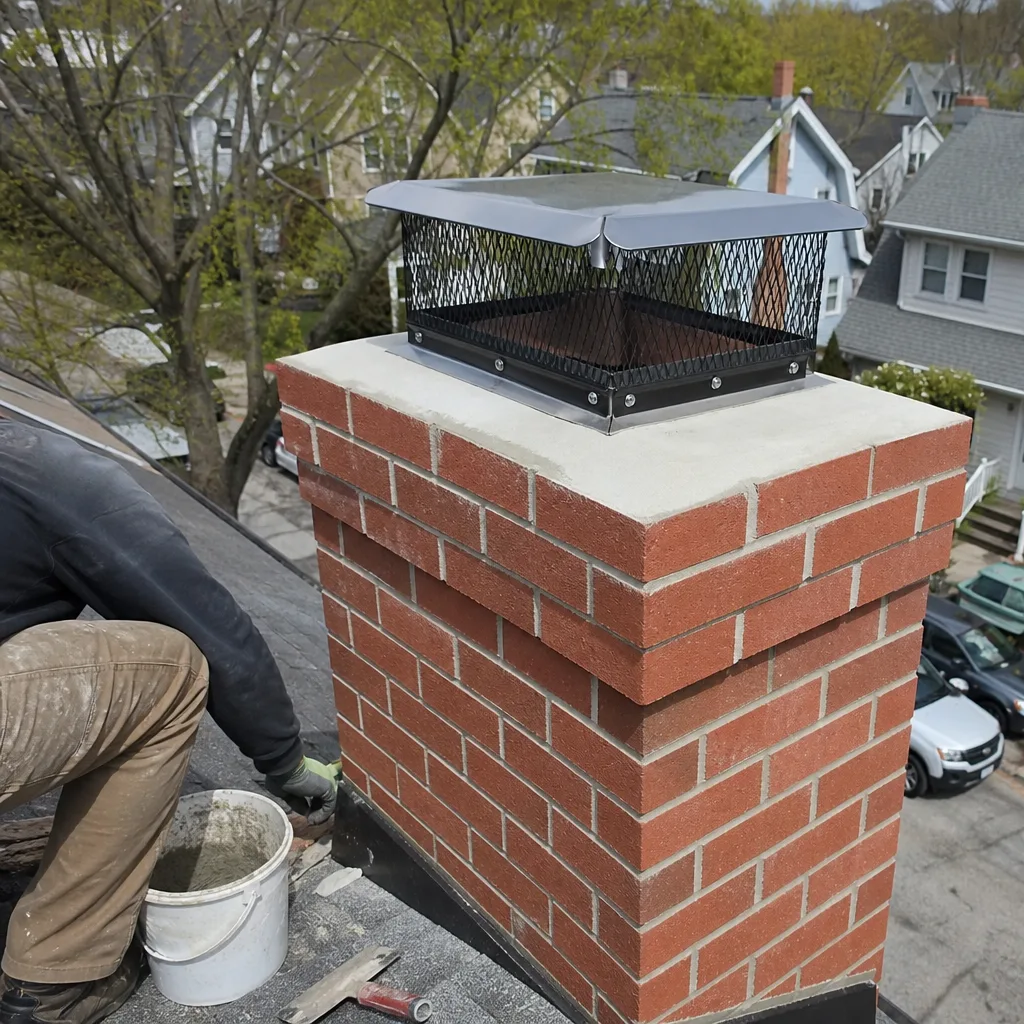
Level 1 sweep and inspection to the NFPA 211 annual standard - flue, crown, cap, and flashing checked and photographed
Chimney sweep logs do not sweep chimneys. They loosen some creosote - which then falls where a brush and vacuum still have to collect it.
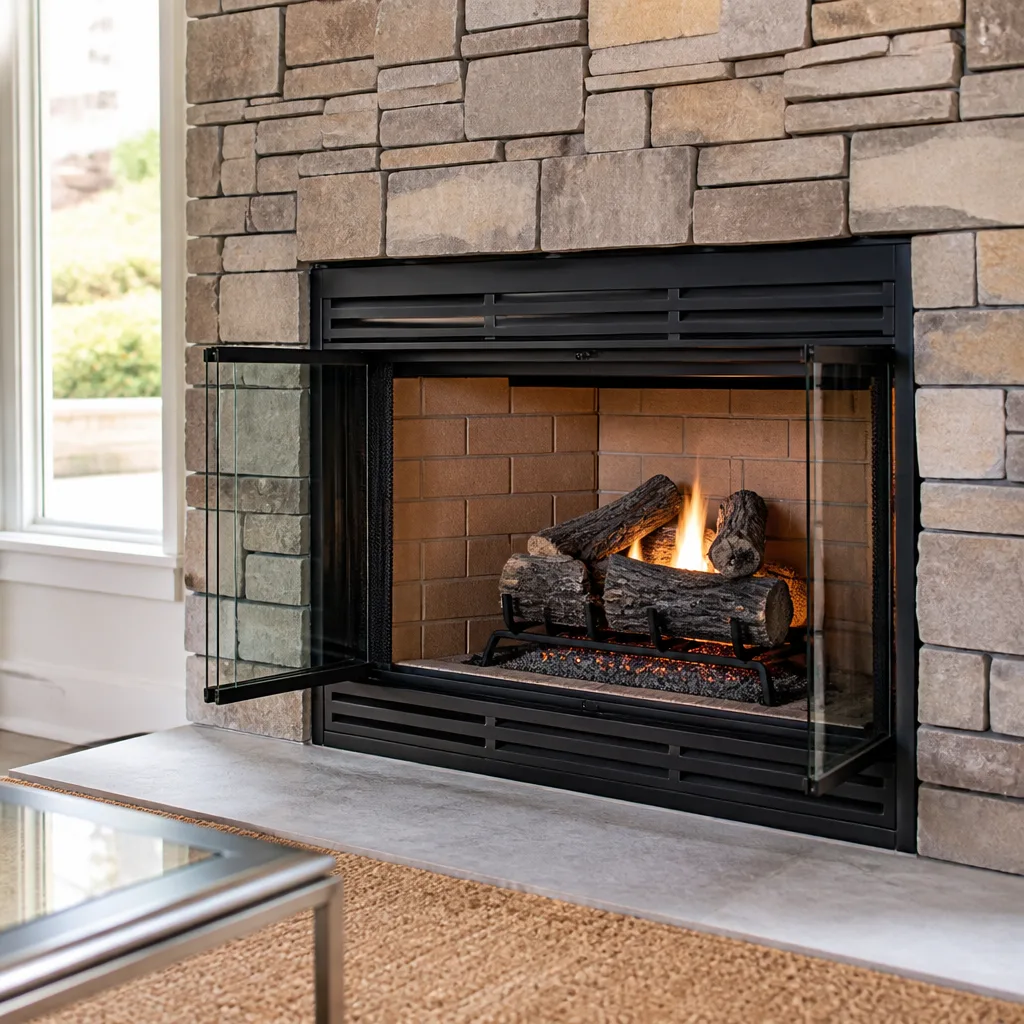
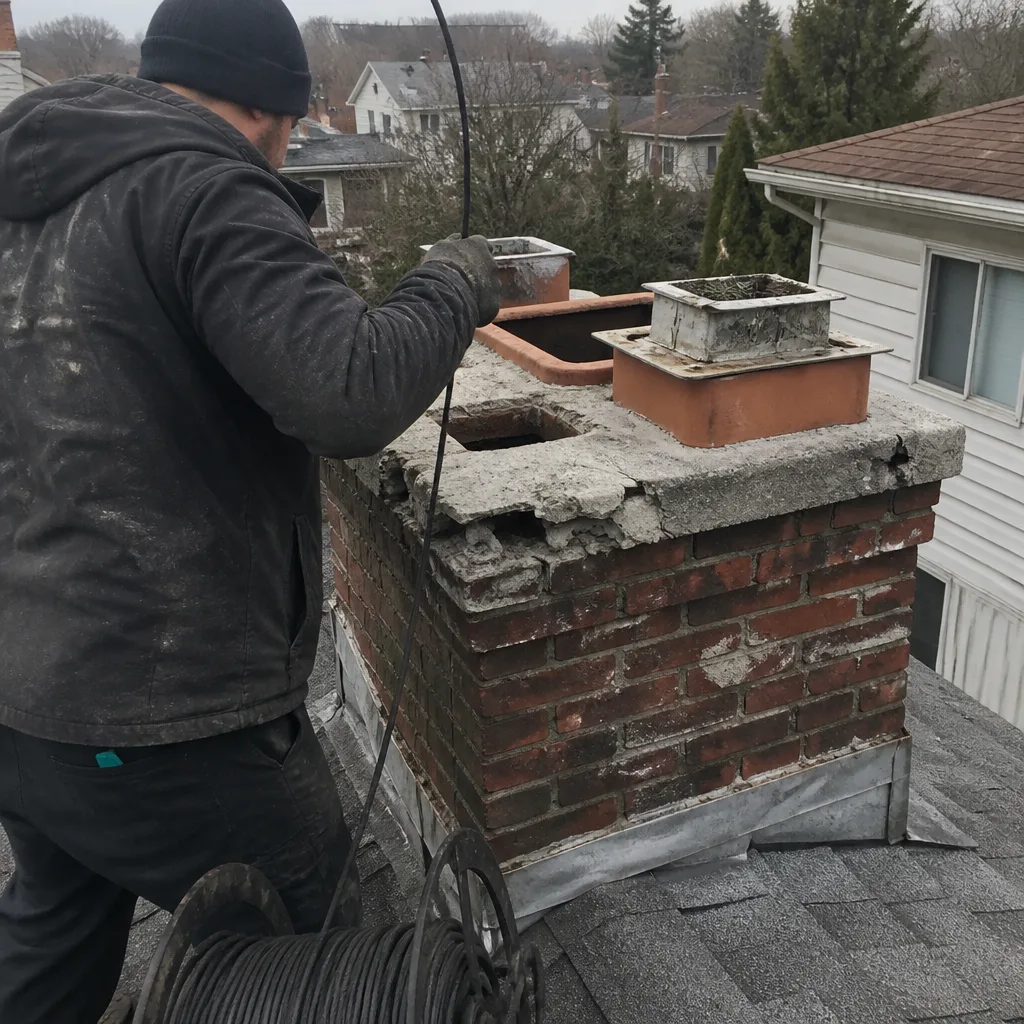 Before
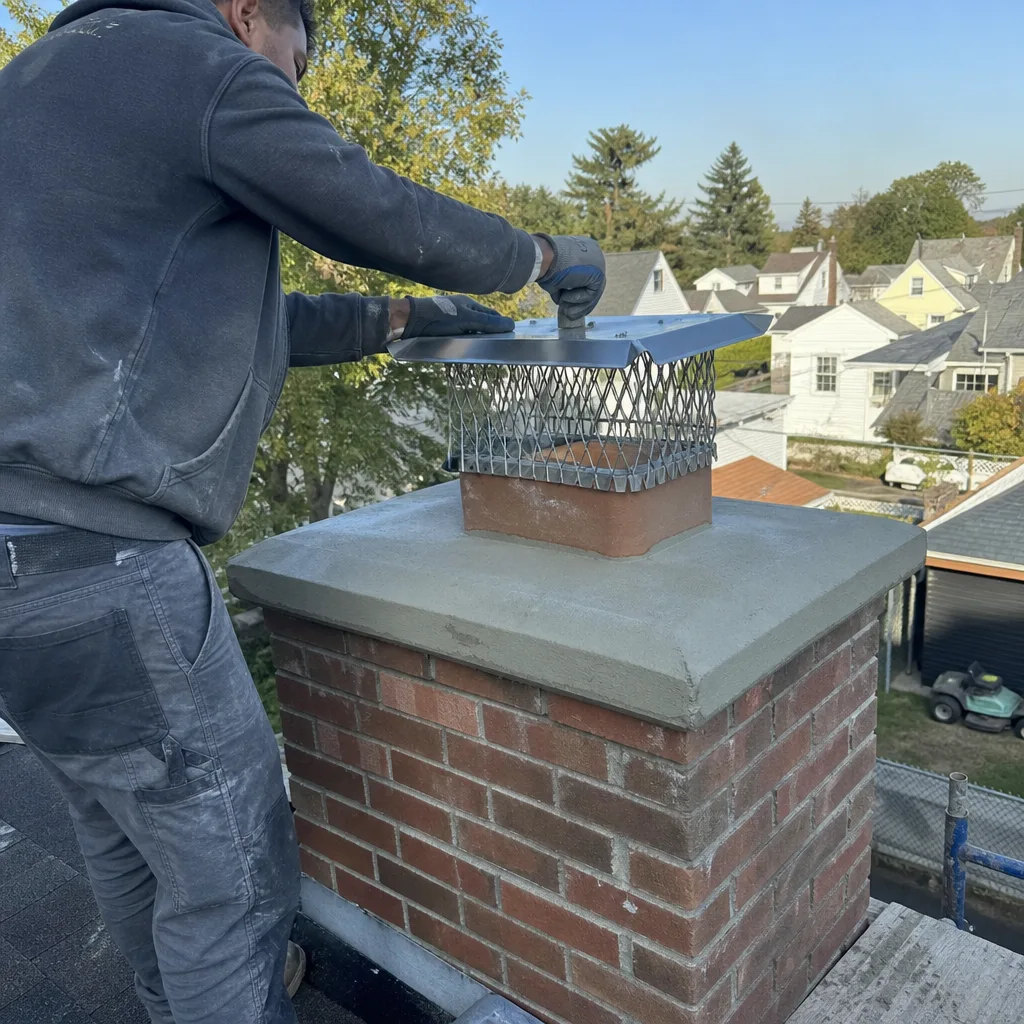 After
After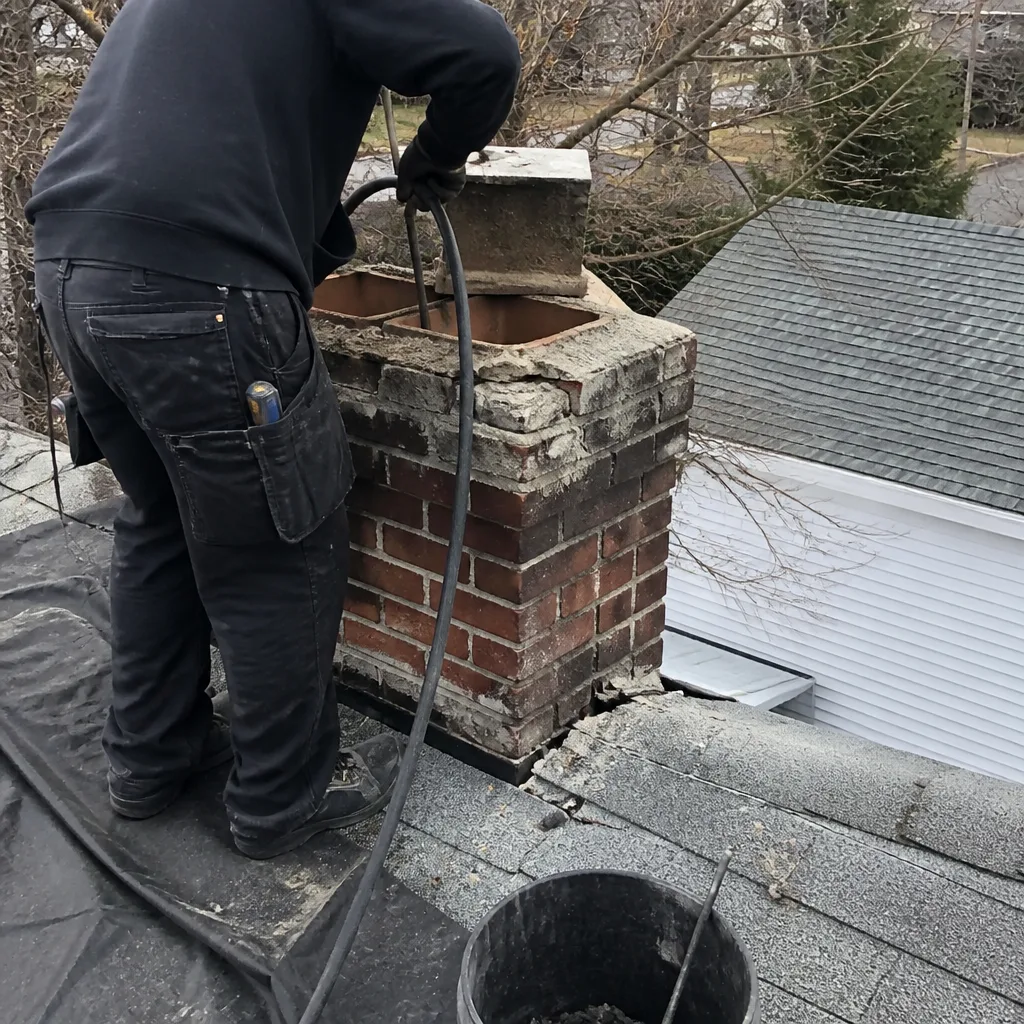 Before
 After
After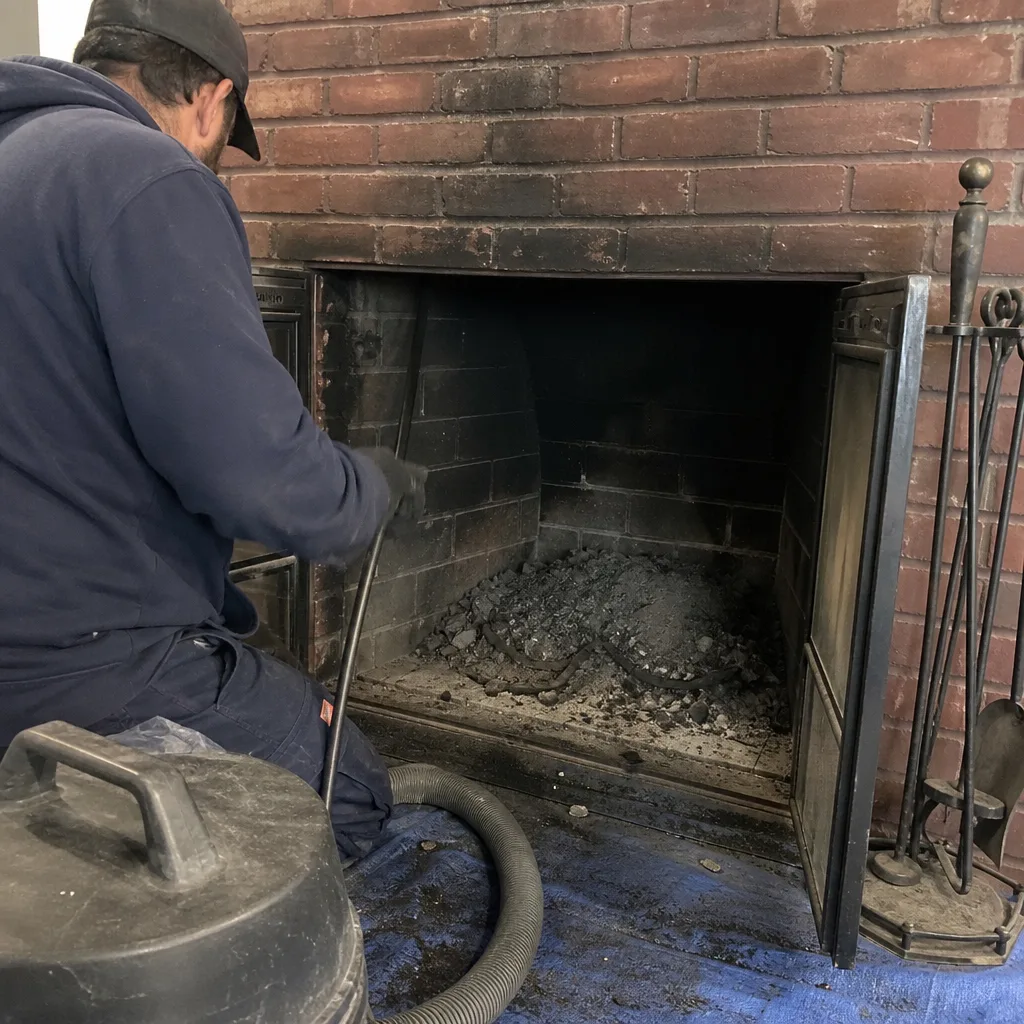 Before
 After
AfterDIY vs Professional Chimney Cleaning: The Flushing Homeowner’s Decision Guide
A chimney brush kit costs $40 at a hardware store. A chimney fire costs an average of $15,000 in structural damage. The gap between those numbers isn’t the brush - it’s knowing whether the flue was clean enough to use in the first place, which a brush can’t tell you. In Flushing, where attached row houses, pre-war construction with offset flues, and converted oil heating systems create conditions no hardware-store kit was designed for, that gap widens considerably. This guide gives you the honest criteria to determine whether you’re in the narrow category where DIY makes sense, or the much larger one where it doesn’t.
Quick Answer
DIY chimney cleaning is reasonable only when three conditions are all true: you have a straight, accessible flue with no offsets; your chimney has passed a documented Level-2 inspection within the past year; and you’re confident working at roof height with proper fall protection. For most Flushing homeowners - especially those in attached housing, pre-war buildings with elbowed flues, or homes with converted oil systems - professional cleaning with camera inspection is the safer choice. The $40 brush kit cleans soot from reachable surfaces; it cannot assess liner integrity, mortar condition, or hidden creosote buildup that causes chimney fires.
Table of Contents
- The Three Conditions That Must All Be True for DIY Cleaning
- What DIY Cleaning Physically Cannot Accomplish
- Flushing Housing Types Where DIY Is Most Problematic
- An Honest Cost Comparison: Equipment, Time, and Risk
- The Pre-Fire DIY Visual Check Every Homeowner Should Do
- Common Mistakes to Avoid
- When to Call a Professional
- Frequently Asked Questions
The Three Conditions That Must All Be True for DIY Cleaning
We’ve been sweeping chimneys in Flushing for over 42 years, and we’ve seen homeowners succeed with DIY cleaning exactly twice. Both times, all three conditions below were met. Miss even one, and you’re gambling with a system that vents carbon monoxide and open flame through your home.
Condition 1: A Straight, Accessible Flue
A straight flue means no offsets, no elbows, no transitions between square and round tile. The brush must travel from top to bottom in a single line, or from bottom to top, without encountering bends that trap the rod or leave surfaces uncleaned.
In our experience across Flushing, straight flues are rare outside of:
- Post-1980s detached homes in neighborhoods like Bayside Terrace or the newer sections near Kissena Park
- Factory-built metal chimney systems with documented manufacturer specs
- Some center-hall colonials with fireplaces on exterior walls
Most Flushing housing stock predates this. The pre-war apartment buildings along Roosevelt Avenue, the attached brick row houses in downtown Flushing, and the converted two-families in Murray Hill almost all have offset flues designed to route around floor joists or structural beams. A standard brush kit will jam at the offset, leave the upper section uncleaned, and give you false confidence.
Access matters too. You need a roof you can walk safely, or a cleanout door at the base. Steep slate roofs, parapet walls on row houses, or roofs with multiple levels require equipment most homeowners don’t own - roof brackets, fall-arrest harnesses, ladder stabilizers rated for the height.
Condition 2: A Documented Recent Inspection
DIY cleaning maintains a system that’s already known to be sound. It does not diagnose a system that’s unknown.
Before you ever consider cleaning your own chimney, you need a Level-2 inspection report from a certified sweep, dated within 12 months, stating:
- The liner is intact with no gaps, cracks, or missing sections
- The flue gases are properly contained - no evidence of leakage into walls or living spaces
- The creosote buildup is standard glazed or powdery soot, not third-degree tar-like glaze that requires chemical treatment
- The firebox and smoke chamber are structurally sound
Without this baseline, you’re cleaning blind. We’ve found cracked flue liners in Flushing homes where the homeowner had “been doing it myself for years.” The crack was above the reach of their brush, venting carbon monoxide into the attic space. They were lucky we found it before heating season.
Condition 3: Confidence Working at Height with Proper Equipment
Chimney cleaning from the top down requires roof access. This is not the same as cleaning gutters or hanging Christmas lights. You’re handling 20-foot rods that catch wind, working near a hot flue, and often dealing with a roof slope that channels you toward the edge.
Proper equipment means:
- A ladder extending 3 feet above the roofline, tied off or held by a second person
- Non-slip footwear with defined heels
- Fall protection if the roof pitch exceeds 4:12 - which most Flushing row house roofs do
- Respiratory protection rated for fine particulate, not a dust mask from the hardware store
- Eye protection that seals against creosote flakes
If any of this feels unfamiliar, you’re not in the narrow category where DIY is reasonable. Call a professional. The chimney cleaning and sweep service in Flushing we provide includes full safety protocol, documented inspection, and no roof work for you to worry about.
What DIY Cleaning Physically Cannot Accomplish
This is where most DIY guides fail homeowners: they describe the brushing process without acknowledging the diagnostic gaps. A brush removes loose material from the flue surface. It tells you nothing about what lies beneath or beyond.
Camera Inspection of Liner Integrity
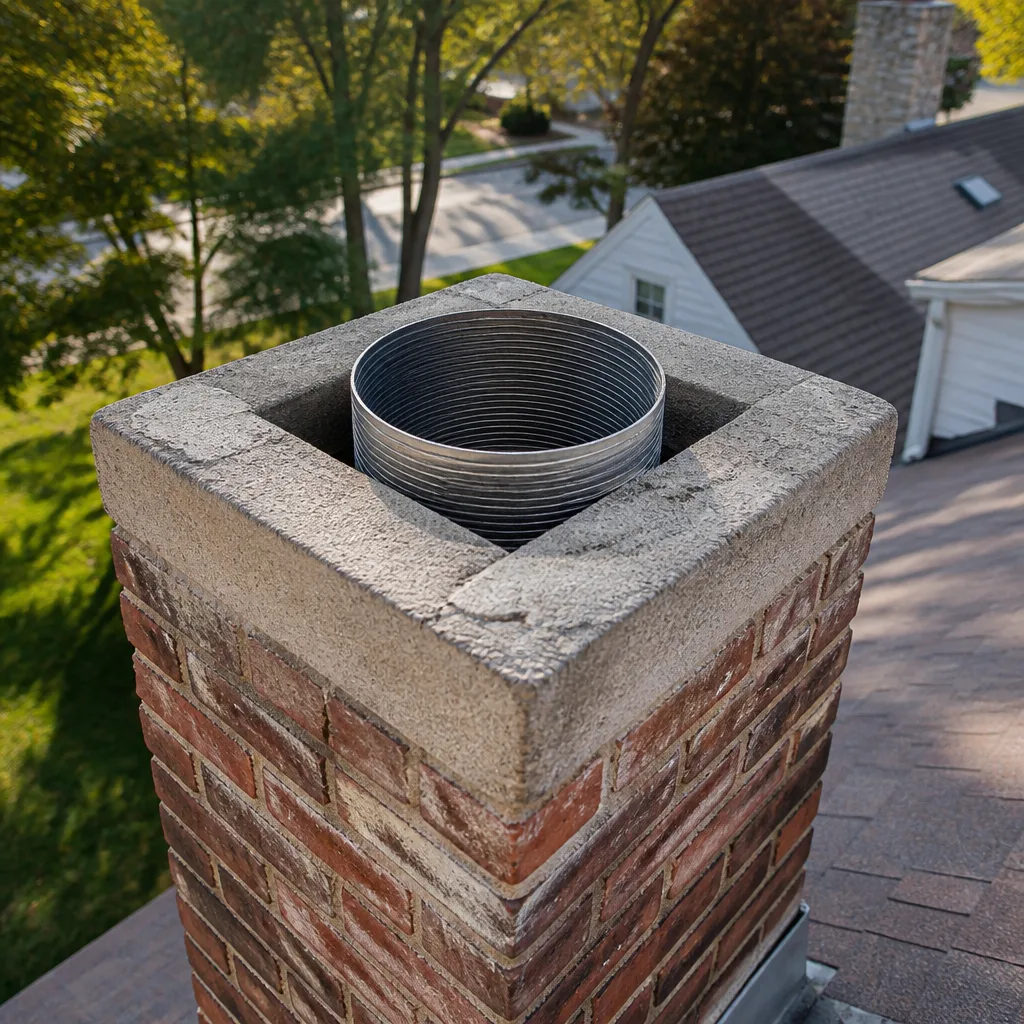
A chimney liner - whether clay tile, stainless steel, or cast-in-place - can look fine from the firebox and be cracked or deteriorated above. Only a camera on a flexible rod, with proper lighting and a trained eye, reveals:
- Hairline cracks in clay tile that open under thermal stress
- Spalling or flaking that reduces liner thickness
- Shifting or settlement gaps at tile joints
- Corrosion pinholes in metal liners, especially in older DuraFlex installations
In Flushing’s climate, with freeze-thaw cycles that stress masonry from November through March, these defects develop faster than in milder regions. A brush kit won’t find them. A Level-2 camera inspection will.
Assessment of Firebox Refractory Panels
Prefabricated fireplaces have refractory panels that reflect heat into the room. When cracked or abraded, they allow heat transfer to surrounding framing - a known cause of house fires. These panels are not visible during standard flue brushing. They require direct inspection, often with panels removed, to assess whether replacement is needed. We carry replacement panels from HeatShield and other manufacturers for this exact reason; most homeowners don’t know to look.
Mortar Joint Evaluation
The mortar between flue tiles, and between bricks in the chimney structure, deteriorates with heat cycling and moisture. Open mortar joints allow creosote to accumulate in the gap between flue and masonry, creating a secondary fire path. They also allow flue gases to leak. This requires visual and tactile inspection, sometimes with a small mirror or probe, at multiple points in the system.
Clearance to Combustibles Verification
Chimneys must maintain minimum clearance to wood framing - typically 2 inches for masonry, as specified by NFPA 211. In older Flushing homes, especially those with modified or rebuilt chimneys, clearances are often compromised by decades of renovation. Measuring this requires access to attic and wall cavities, not just the flue itself.
The bottom line: DIY cleaning maintains surface cleanliness in a known-good system. It does not verify that the system is good. That verification is what separates maintenance from false confidence.
Flushing Housing Types Where DIY Is Most Problematic
Flushing’s housing stock is unusually diverse for a single neighborhood, and each type presents specific challenges that override generic DIY advice.
Attached Row Houses with Shared Chimney Stacks
The brick row houses along Sanford Avenue, Main Street, and the blocks between Roosevelt and Northern Boulevard often share chimney structures with adjacent units. Your flue may be properly maintained while your neighbor’s is not - but they share a wall, and a fire in one unit spreads through the stack to the next.
More critically, these chimneys often have:
- Multiple flues in a single stack, with thin dividing walls that deteriorate
- Party-wall construction with no true exterior exposure, trapping moisture
- Historic modifications where oil, gas, and wood flues were combined or rerouted
DIY cleaning of your flue tells you nothing about the condition of the shared structure or adjacent flues. Professional inspection with camera documentation is the only way to understand the full risk profile.
Homes with Old Converted Oil Flues
Many Flushing homes, especially the pre-war stock in Broadway-Flushing and the areas west of Main Street, originally had oil-fired heating with large, unlined masonry flues. When converted to gas, the flue was often left as-is - too large for modern gas appliances, unlined, and prone to condensation damage.
These flues:
- Accumulate acidic condensation that deteriorates mortar from the inside
- May not draft properly for the new appliance, causing carbon monoxide spillage
- Often have hidden bends or offsets where the original chimney was modified
- Require liner sizing calculations that match appliance BTU output to flue diameter
A brush kit cannot address any of this. In fact, aggressive brushing of deteriorated mortar can worsen the damage. We’ve relined dozens of these systems with properly sized DuraFlex or Olympia Chimney stainless liners - work that requires engineering assessment, not maintenance cleaning.
Buildings with Offset or Elbowed Flues
Pre-war construction in Flushing frequently used offset flues to route around structural elements. These offsets create:
- Points where creosote accumulates heavily due to turbulence
- Surfaces unreachable by standard brush rods
- Stress points where tile liners crack
- Draft problems that cause smoking or poor combustion
We’ve found offset flues in buildings from the 1920s and 1930s throughout Flushing that had never been properly cleaned above the offset - decades of accumulation, invisibly waiting for ignition. No homeowner with a brush kit from the hardware store could have known.
An Honest Cost Comparison: Equipment, Time, and Risk
The internet is full of comparisons that stop at the brush kit price. Here’s the full accounting, including our Chimney Cleaning Cost Breakdown: The Flushing Homeowner’s Reference for 2026.
DIY Equipment Costs
| Item | Cost Range | Notes |
|---|---|---|
| Basic brush kit (rod + brush) | $35-$75 | Single size; may not match your flue diameter |
| Extension rods (if needed) | $15-$30 | Most kits include 3-4 rods; tall chimneys need more |
| Proper respiratory protection (N100/P100) | $25-$50 | Dust masks are inadequate for creosote particulate |
| Safety glasses, sealed | $10-$20 | |
| Ladder stabilizer/tie-off | $40-$80 | Required for safe roof access |
| Fall protection harness (if roof pitch > 4:12) | $100-$200 | OSHA requirement for professional work; homeowner should match |
| Drop cloths, shop vacuum with HEPA filter | $50-$150 | Creosote is hazardous waste; standard vacuums redistribute it |
| Total realistic DIY cost | $275-$605 | For one cleaning, with no diagnostic capability |
Professional Service Cost in Flushing
A professional chimney sweep and Level-2 inspection in the Flushing market typically runs $250-$400 for a standard fireplace or wood stove flue. This includes:
- Full brushing of the flue with properly sized brushes
- Camera inspection with photos provided to you
- Firebox and smoke chamber inspection
- Exterior chimney condition assessment
- Written condition report with recommendations prioritized
The chimney cleaning and sweep service in Flushing we offer includes all of this, plus the 90-Day Done Right Promise - if anything’s not right, we make it right, in writing, no arguing.
Time Investment
DIY cleaning, done properly with setup and cleanup, takes 3-5 hours for a first-timer. Professional service takes 60-90 minutes of your time, with no roof work, no cleanup, and no disposal of hazardous material.
The Risk Factor
This is the cost no comparison table captures. Missing a cracked liner, deteriorated mortar, or improper clearance can result in:
- Chimney fire: $15,000-$50,000+ in structural damage, potential injury or death
- Carbon monoxide intrusion: hospitalization, long-term health effects, fatality
- Insurance denial: many policies require documented professional maintenance for chimney-related claims
We’ve responded to chimney fires in Flushing homes where the homeowner “cleaned it every year.” The flue was brushed. The liner was cracked above the brush’s reach. The fire started in the gap between liner and masonry - invisible, until it wasn’t.
The Pre-Fire DIY Visual Check Every Homeowner Should Do
Whether you hire a professional or not, you should know your own chimney’s condition. This check takes 15 minutes and requires no special equipment. It won’t replace a professional inspection, but it makes you an informed homeowner rather than a passive one.
Step-by-Step Seasonal Visual Check
- Open the damper fully. Look up the flue with a flashlight. You should see light at the top on a sunny day. If you don’t, there’s either a blockage or a severe offset - both require professional attention before use.
- Check for obstructions. Look for bird nests, leaves, or debris. In Flushing, squirrel and raccoon activity is common, especially in neighborhoods with mature trees like Kissena Park or the Broadway-Flushing historic district. Even partial blockage can cause dangerous backup of combustion gases.
- Examine the firebox walls. Look for cracks in refractory panels, missing mortar between firebricks, or white efflorescence (indicating moisture intrusion). Any crack wider than a dime in a refractory panel means replacement before the next fire.
- Inspect the damper. It should open fully, close tightly, and show no warping or corrosion. A stuck or damaged damper wastes heat when closed and can block emergency escape of smoke when open.
- Check the hearth and surrounding area. Look for staining, heat discoloration, or loose material on the hearth extension. These can indicate past overheating or improper construction.
- Walk outside and look at the chimney exterior. Missing or spalling bricks, deteriorated mortar joints, a cracked or missing chimney cap, or staining on the masonry all indicate water intrusion that accelerates internal deterioration. In Flushing’s freeze-thaw climate, exterior damage worsens rapidly through winter.
- Verify the cap and spark arrestor. The cap should be securely in place with mesh intact. Missing caps allow rain, animals, and debris entry - the most common cause of preventable chimney damage we see.
If you find anything concerning in this check, stop. Do not use the fireplace or appliance until a professional evaluates it. Document what you found with photos for reference.
This check also gives you context when a professional arrives. You’ll understand their findings, ask better questions, and recognize whether their assessment matches what you observed. The best homeowner relationships we have are with people who know their own homes.
Common Mistakes to Avoid
- Assuming a clean flue means a safe flue. Soot removal is maintenance; safety verification is diagnosis. A brushed flue with a cracked liner above the brush’s reach is still dangerous. We’ve found this exact scenario in Flushing homes where the homeowner proudly reported “I do it myself every fall.”
- Using the wrong brush size or material. A brush too small leaves uncleaned surface; too large can damage clay tile or get stuck. Polypropylene brushes melt in active flues; wire brushes damage stainless steel liners. Most hardware-store kits include one mid-size poly brush - wrong for many Flueling flue dimensions and materials.
- Cleaning from the bottom only. Bottom-up brushing with a weighted brush works for straight flues but deposits all debris in the firebox - a messy, hazardous cleanup that most homeowners underestimate. Top-down with proper rod control is cleaner but requires roof access most Flushing row houses complicate.
- Ignoring the smoke chamber and firebox. The smoke chamber (the area above the damper, below the flue) accumulates creosote heavily due to turbulence, and it’s unreachable with standard flue brushes. DIY cleaning of the flue alone misses this critical fire-risk zone.
- Using chemical creosote removers as a substitute for brushing. These products modify creosote to make it more brushable; they do not remove it. Used without proper brushing, they create a flaky, more easily ignitable layer. We’ve seen homeowners in Flushing’s older housing stock treat chemically for years without mechanical removal, building a dangerous deposit.
- Skipping inspection because “it was fine last year.” Chimney deterioration accelerates. A liner that was sound last season can crack over one winter’s freeze-thaw cycle. Annual professional inspection catches this; DIY cleaning without inspection cannot.
- Attempting roof work without fall protection. This is the mistake that can end your life before any chimney problem does. Flushing’s row house roofs, with their parapets, multiple levels, and often steep pitches behind decorative cornices, are not forgiving. Every year, homeowners die falling from roofs doing work that should have been hired out.
When to Call a Professional
Call a professional sweep if any of the following apply: your chimney has never had a Level-2 camera inspection; you live in an attached home, pre-war building, or house with a converted oil flue; you’ve noticed any smoke backup, odd odors, or performance changes; you’re preparing to sell your home and need documented condition; or you simply don’t have the equipment, physical ability, or comfort with roof work to clean safely. See our How to Hire a Chimney Cleaning Contractor in Flushing: A Step-by-Step Guide for what to look for.
In Flushing’s housing market, with its mix of historic construction, dense development, and converted systems, professional assessment isn’t a luxury - it’s due diligence. Chimney repair in Flushing often reveals conditions that no amount of DIY cleaning would have addressed: deteriorated chimney crowns, improperly sized liners, clearance violations hidden in wall cavities.
Hearthstone Chimney Co. offers free estimates in Flushing. Call (516) 206-6672. A live person answers, 24 hours a day, every day. We’ll schedule a visit, perform a full camera inspection, and give you a plain-English verdict with photos you can see. No pressure, no surprises on the bill - just the thing done correctly, and our 90-Day Done Right Promise in writing.
Frequently Asked Questions
A professional chimney sweep with Level-2 camera inspection in Flushing typically costs $250-$400 for a standard fireplace or wood stove flue. This includes full brushing, camera inspection with photos, firebox and smoke chamber examination, exterior assessment, and a written condition report. The exact price depends on flue accessibility, number of flues, and whether creosote buildup requires chemical pre-treatment. Call (516) 206-6672 for a free estimate - we’ll give you the exact number before any work begins.
You should never accept a liner recommendation without seeing camera evidence. At Hearthstone Chimney Co., we show you the photos and explain what we’re seeing in plain English. A liner is necessary when the existing flue is cracked, improperly sized for the appliance, or unlined masonry that doesn’t meet current code. In Flushing’s converted oil systems, we frequently find flues that are too large for gas appliances, causing condensation damage and poor draft. But we also tell homeowners when a liner can wait - when the defect is minor, documented, and monitorable. No photos, no recommendation. That’s our standard.
The National Fire Protection Association recommends annual inspection for all chimneys, and sweeping when creosote buildup exceeds 1/8 inch. For Flushing homeowners who burn wood regularly - especially dense hardwoods like oak common in local deliveries - this typically means annual sweeping. Gas and oil flues should be inspected annually and cleaned as needed based on inspection findings. The freeze-thaw cycles in our climate accelerate masonry deterioration, making annual inspection particularly important for unlined or older chimneys. Our Seasonal Chimney Cleaning Care for Flushing: Year-Round Homeowner’s Guide has the full schedule.
Skipped cleaning allows creosote to accumulate. First-degree creosote (sooty, easily brushed) becomes second-degree (shiny flakes) and then third-degree (tar-like, highly combustible). Third-degree creosote ignites at approximately 451°F - temperatures easily reached in normal fireplace operation. The resulting chimney fire can crack liners, damage masonry, and spread to framing through deteriorated mortar. Carbon monoxide risk increases as flue gases leak through cracks. In attached Flushing housing, your chimney fire endangers neighbors. The $250-$400 sweep cost prevents the $15,000+ average fire damage. Call (516) 206-6672 to schedule before burning season.
A standard shop vacuum is inadequate and potentially hazardous for chimney cleaning. Creosote particles are fine, oily, and toxic; they require HEPA filtration and proper disposal as hazardous waste. Standard vacuums redistribute fine particles into your living space. More critically, vacuuming removes loose debris from accessible surfaces but does not clean the flue lining, assess structural condition, or address creosote adhered to flue walls. It’s a cleanup step, not a cleaning method. Professional sweeps use specialized vacuums with triple-filtration systems as part of a complete service, not as a substitute for brushing and inspection.
A Level-1 inspection is visual, accessible-surface examination - appropriate for chimneys with no changes, no problems, and continuous service. A Level-2 inspection includes everything in Level-1 plus camera examination of the internal flue, accessible portions of the attic and basement for clearance verification, and assessment of the chimney exterior. It’s required for real estate transactions, after chimney fires, when changing appliance type, or when any performance problem exists. In Flushing’s older housing stock, we recommend Level-2 for all initial inspections and every 3-5 years thereafter, with Level-1 in between if no problems are found. The camera findings are what protect you from hidden defects.
The Bottom Line
DIY chimney cleaning occupies a narrow, specific territory: straight flues, documented sound condition, and homeowners equipped for safe roof work. For the majority of Flushing homeowners - those in attached housing, pre-war construction, converted systems, or simply without the equipment and comfort for roof work - professional service provides diagnostic capability that no brush kit offers. The honest cost comparison favors professional work when you account for proper equipment, time, and the unpriced risk of missing hidden defects.
The most informed homeowner isn’t the one who does everything themselves. It’s the one who knows what they can check, what they can’t assess, and when to call someone who can. Do your seasonal visual check. Know your chimney’s condition. And when it’s time for the work that requires training, equipment, and documentation, call a professional who’ll show you photos, explain in plain English, and stand behind the result.
We’ve served Flushing and surrounding communities for over 42 years. We’re not going anywhere. When you’re ready for an inspection, a sweep, or just an honest opinion on whether your chimney needs attention, we’re here. Photos you can see. A plain-English verdict. Done right - and we stand behind it.
Written by Russell Haines, Owner at Hearthstone Chimney Co., serving Flushing since 2014.