
Last updated September 10, 2026
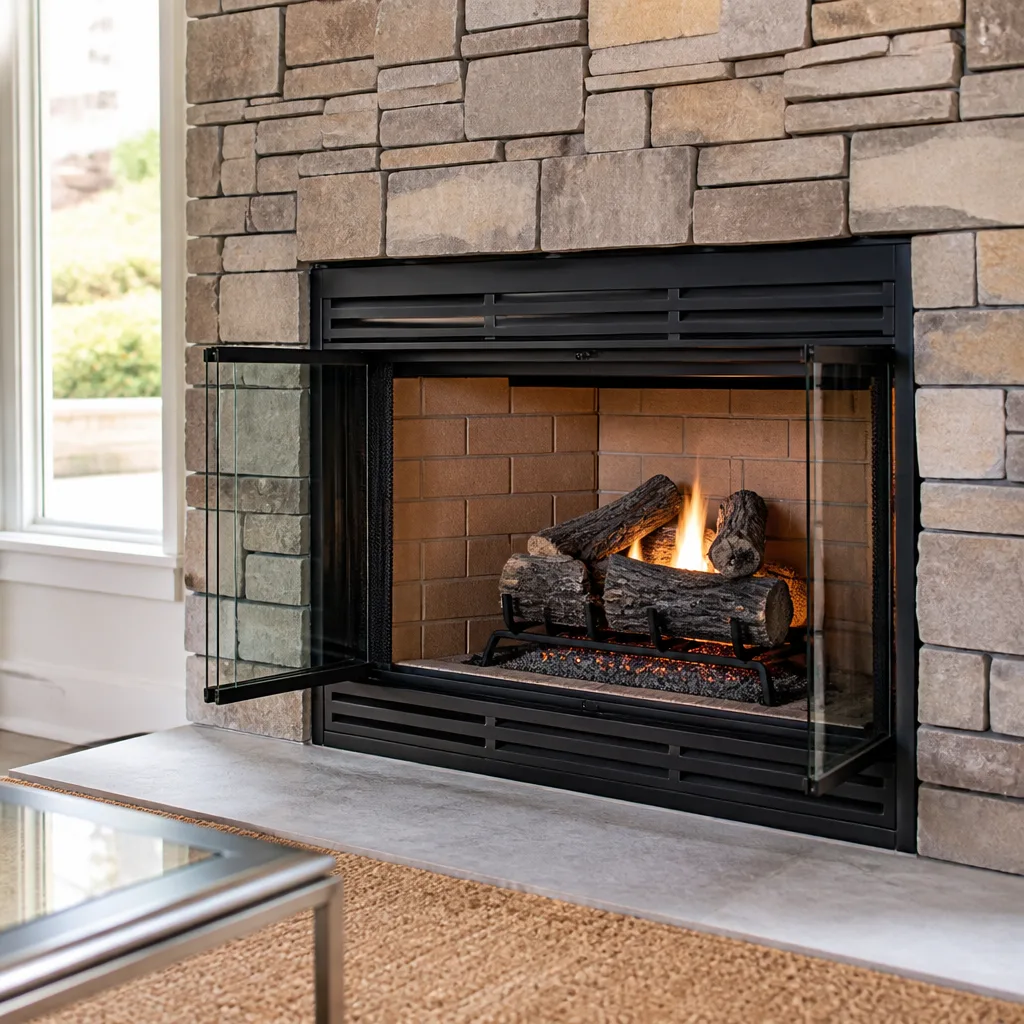
Level 1 sweep and inspection to the NFPA 211 annual standard - flue, crown, cap, and flashing checked and photographed
Chimney sweep logs do not sweep chimneys. They loosen some creosote - which then falls where a brush and vacuum still have to collect it.
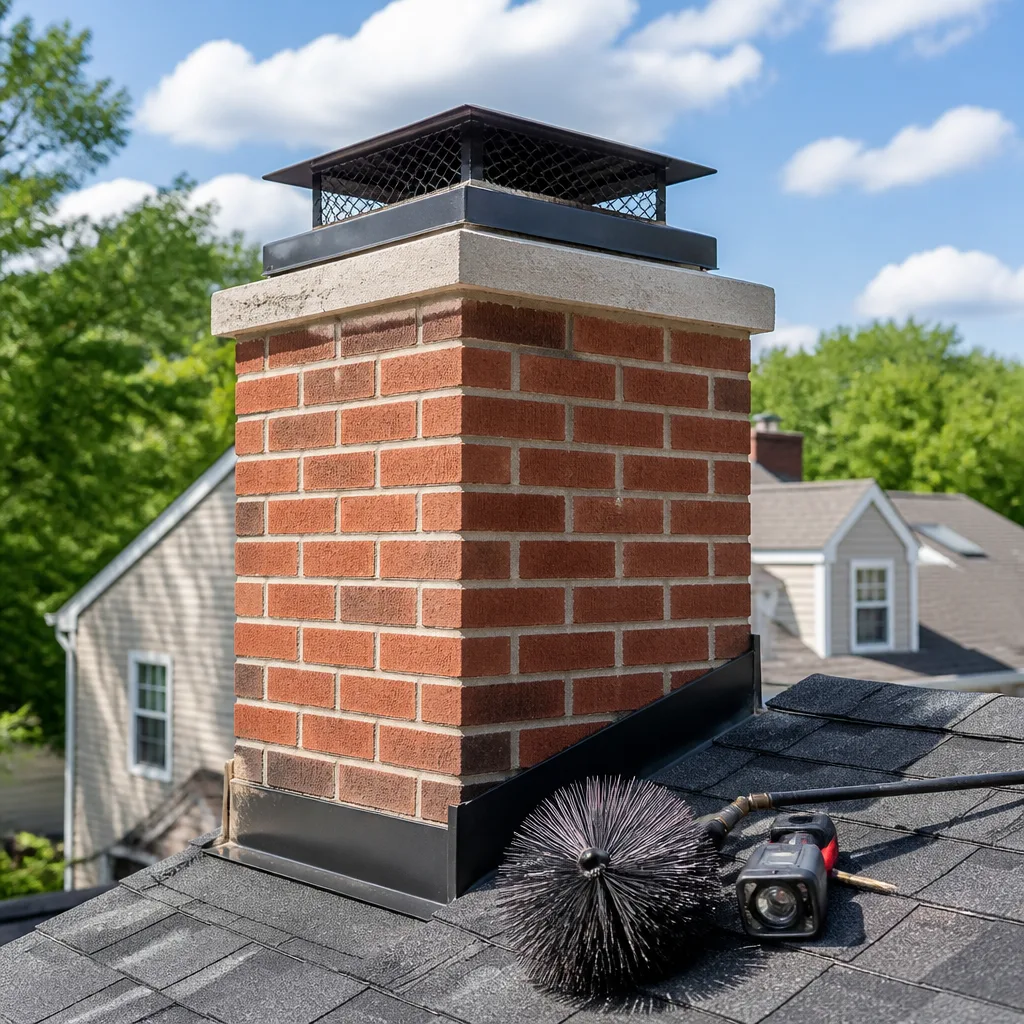
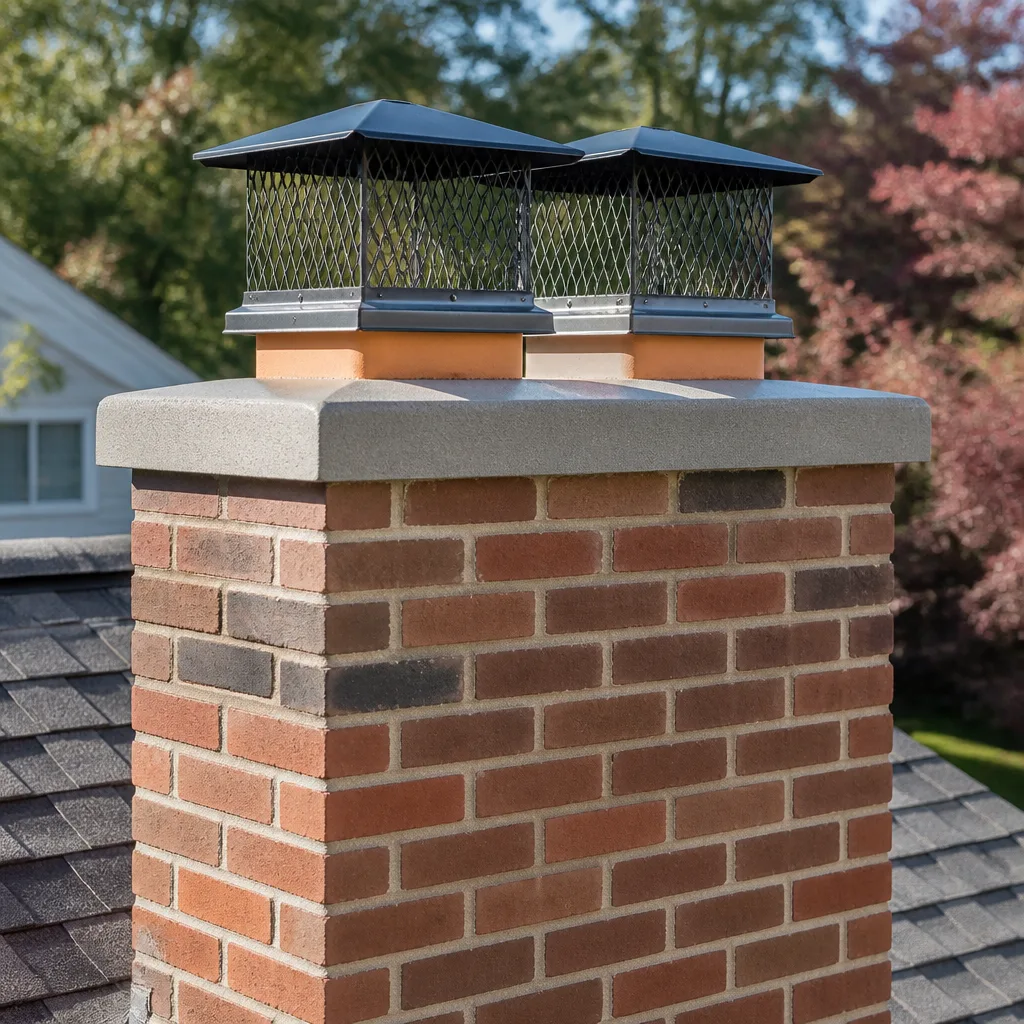
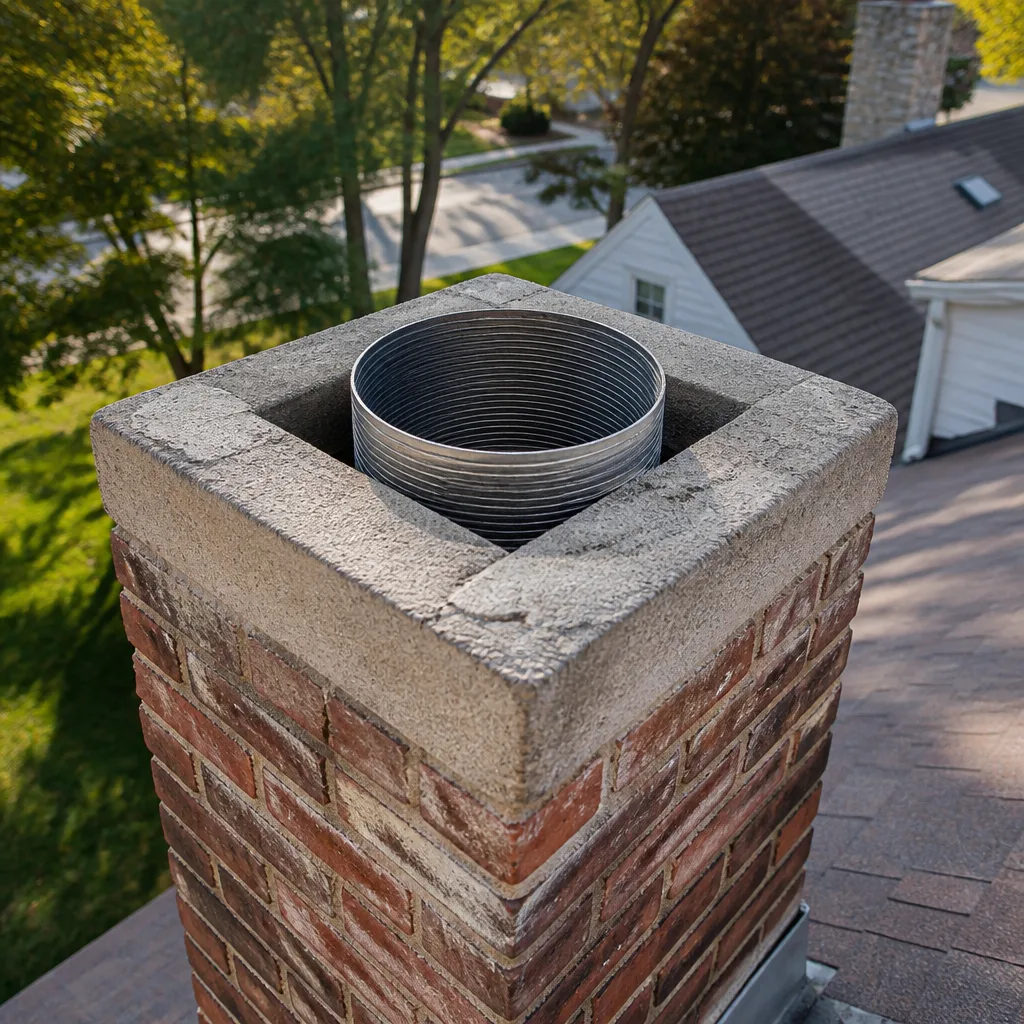
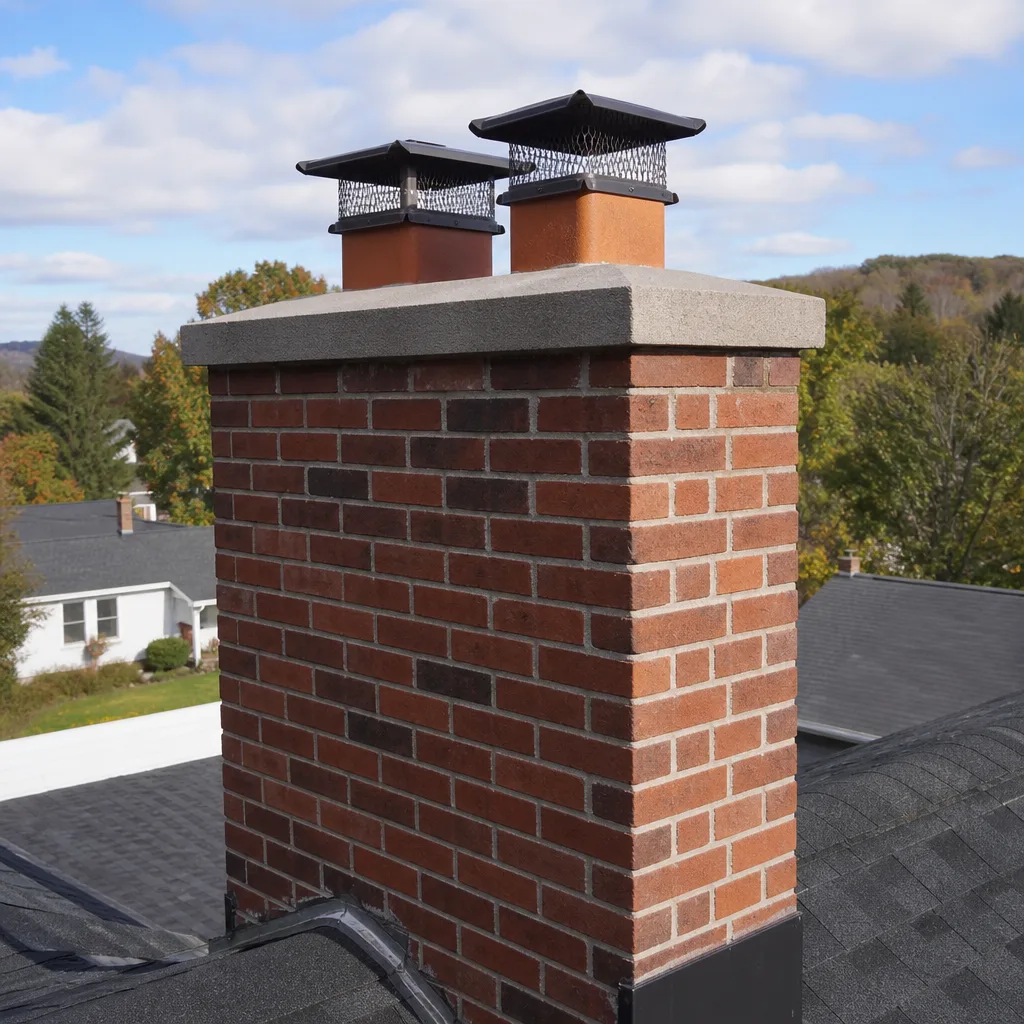
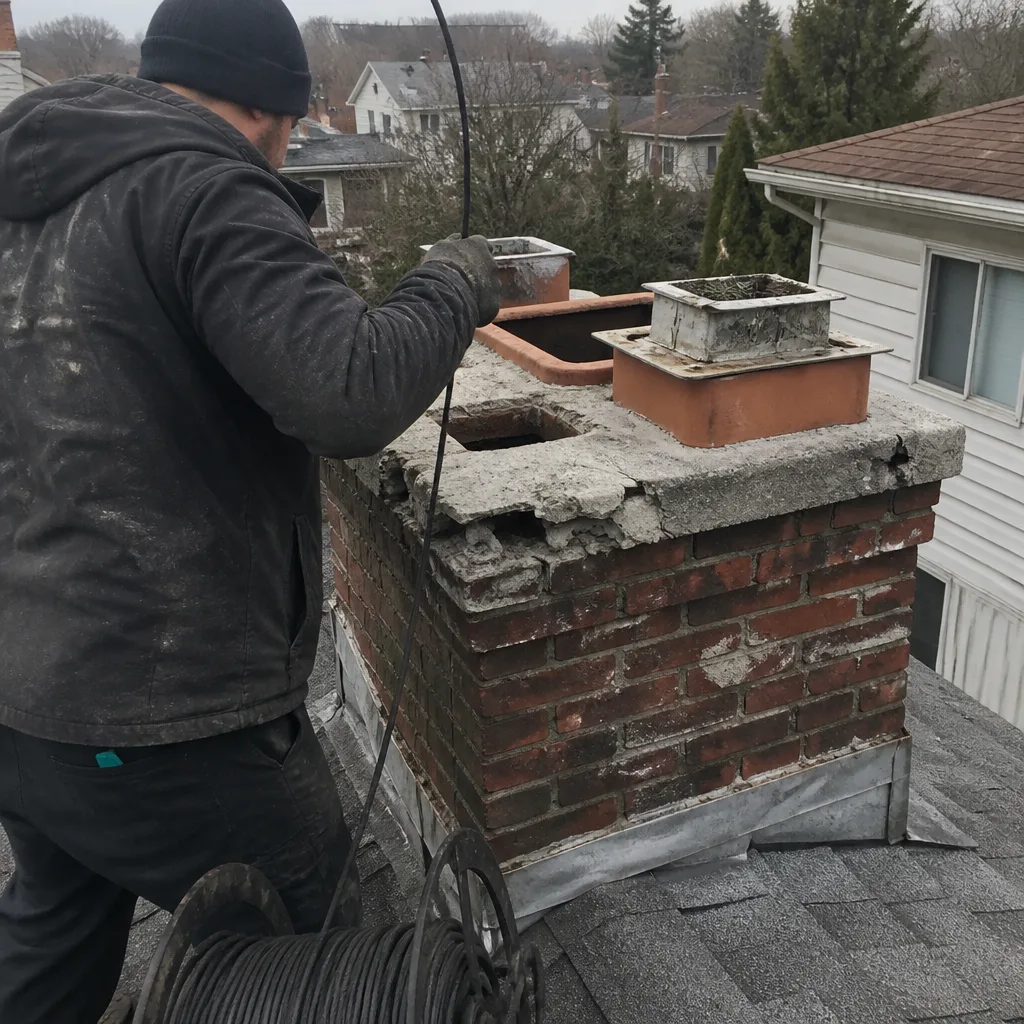 Before
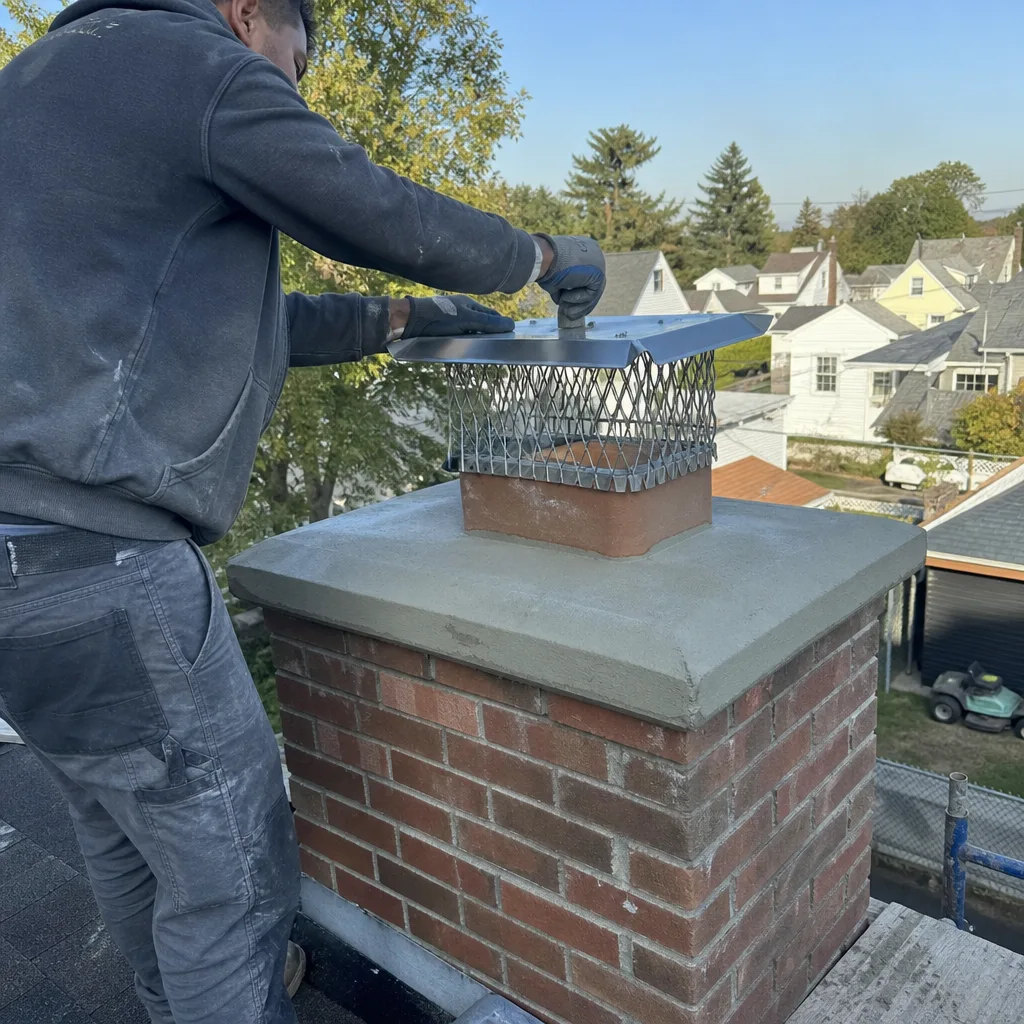 After
After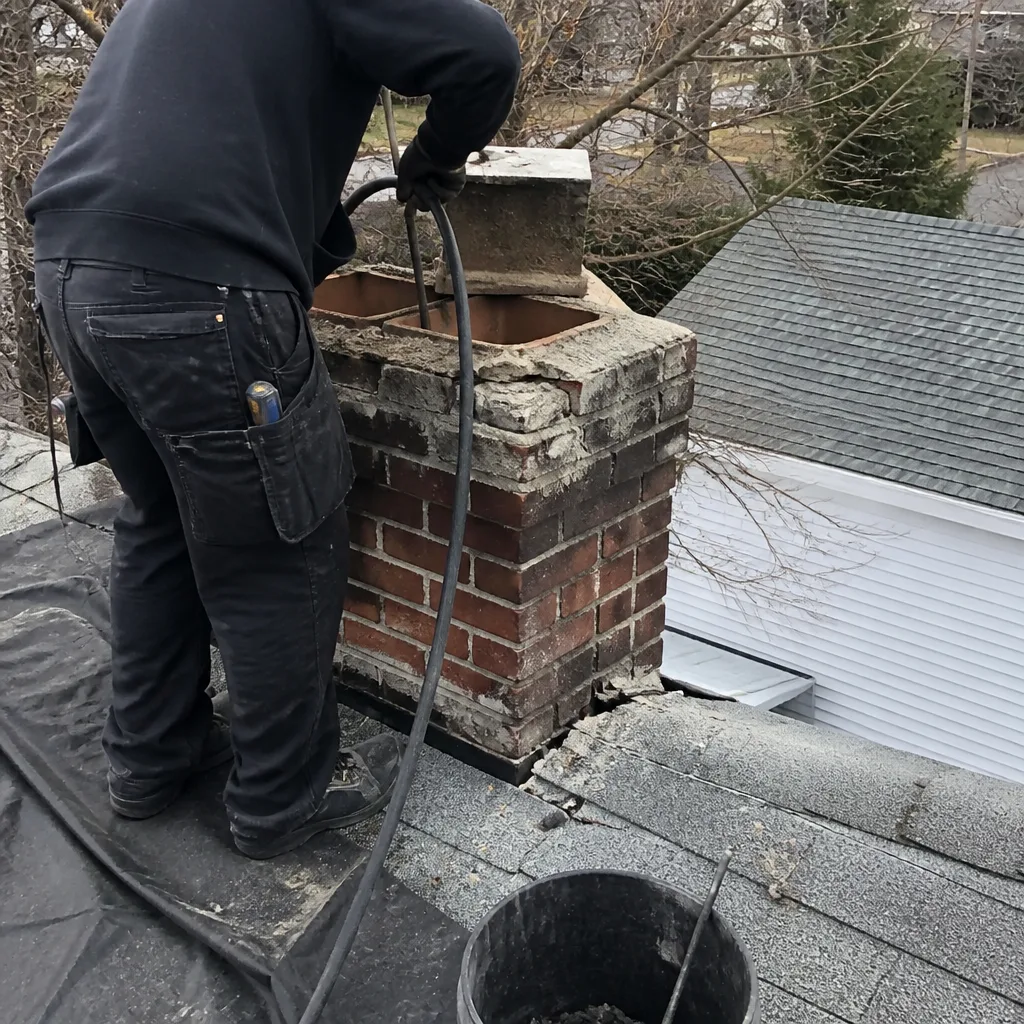 Before
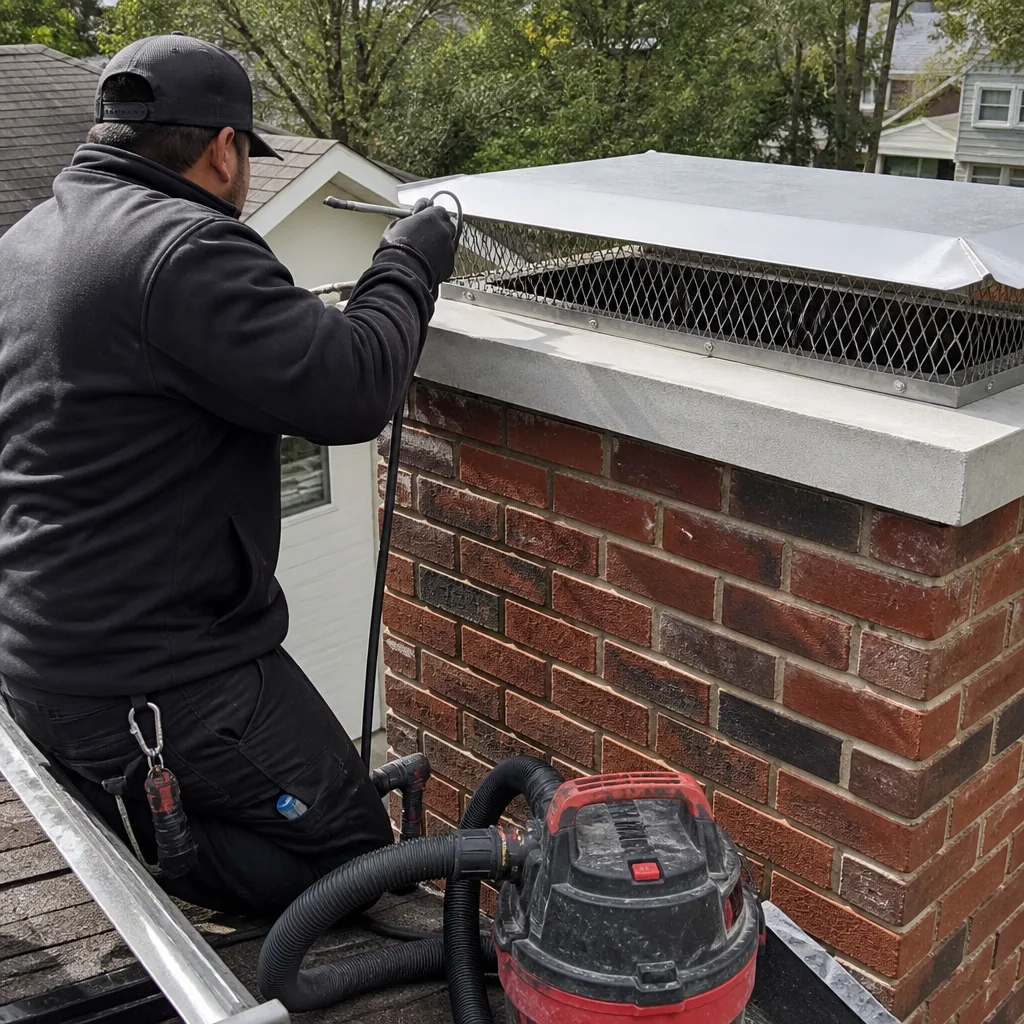 After
After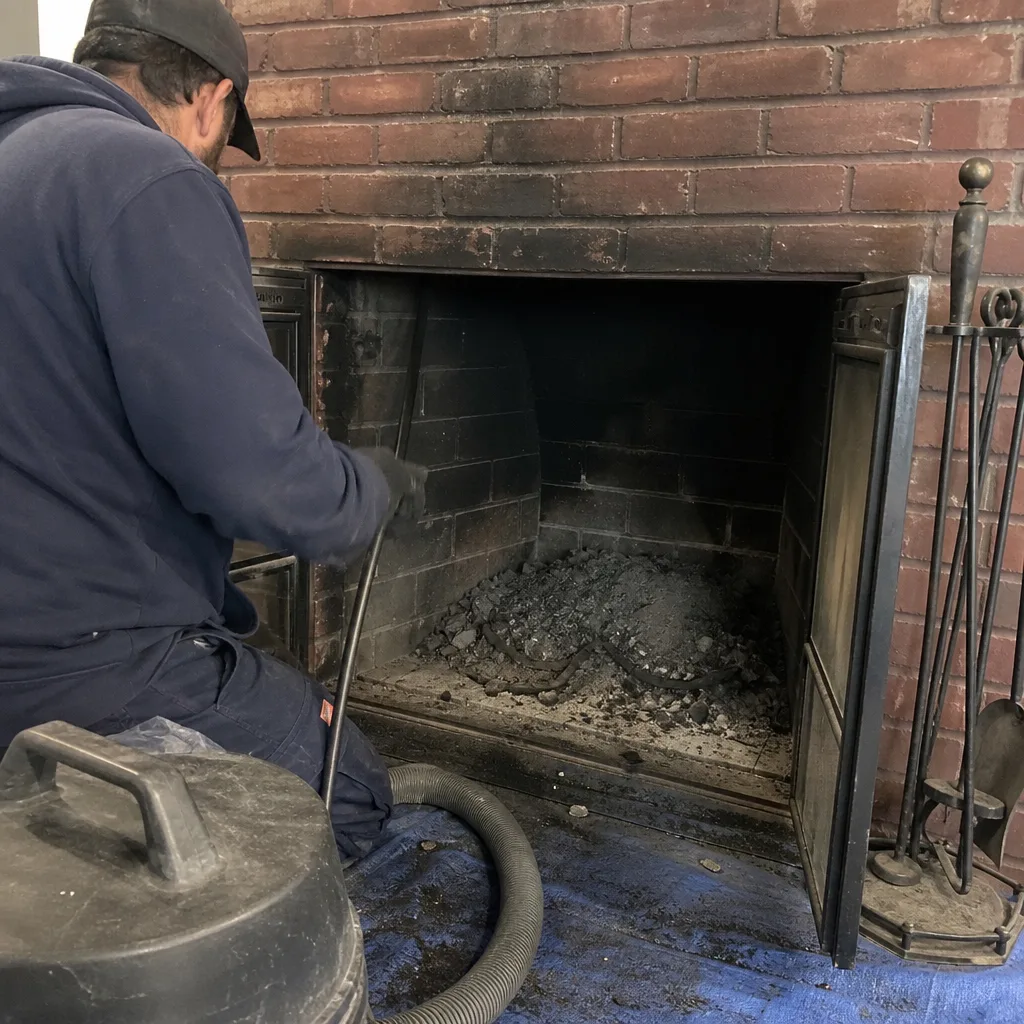 Before
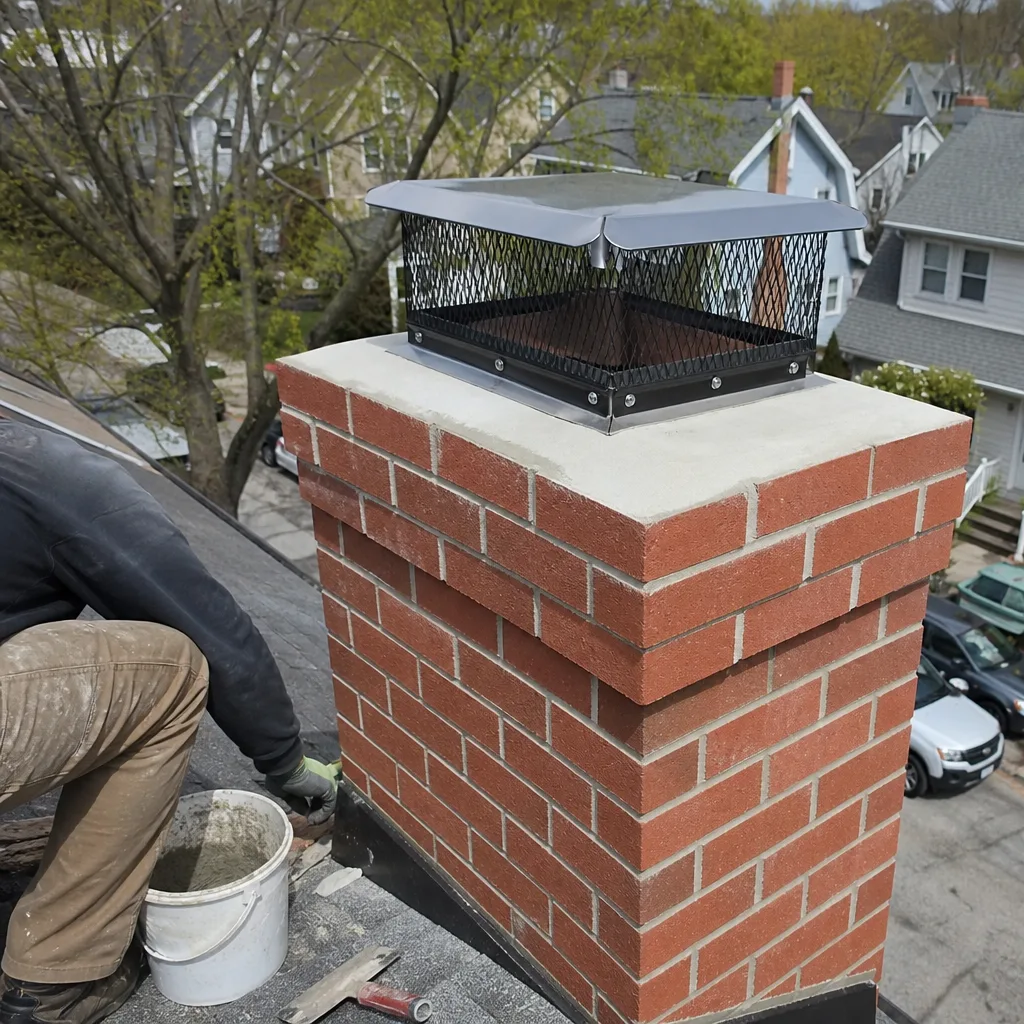 After
AfterSeasonal Chimney Cleaning Care for Flushing: Year-Round Homeowner’s Guide
Queens sees an average of 28 freeze-thaw cycles per winter. Each one works water into any crack in your chimney crown, mortar joints, or flashing and expands it slightly wider. By spring, minor maintenance becomes moderate repair. In Flushing, where homes sit close together and chimneys work hard through long heating seasons, the idea of a single annual sweep misses half the picture. This guide - along with our Chimney Cleaning & Sweep Maintenance Checklist for Flushing Homeowners - breaks down what your chimney needs in each quarter, why timing matters, and how to build a simple calendar that keeps small problems from becoming expensive ones.
Quick Answer
Year-round chimney care in Flushing means four distinct tasks: spring inspection for freeze-thaw damage, summer sweep and cap check before humidity and nesting season peak, fall booking in September before Queens companies fill their schedules, and winter monitoring for odors, backdraft, or rust that signal immediate danger. A seasonal approach catches problems when they are small and schedules work when technicians are available.
Table of Contents
- Spring: Assessing Freeze-Thaw Damage
- Summer: Humidity, Nesting, and the Off-Season Sweep
- Fall: Why September Booking Beats November Panic
- Winter: Safe Monitoring Between Fires
- Building Your Seasonal Chimney Calendar
- What Seasonal Care Costs in Flushing
- Common Mistakes to Avoid
- When to Call a Professional
- Frequently Asked Questions
Spring: Assessing Freeze-Thaw Damage
March and April in Flushing bring the end of heating season and the beginning of the most important inspection window of the year. After 28 or more freeze-thaw cycles, your chimney has been through a stress test no other season provides. Water seeps into hairline cracks, freezes overnight, and expands with enough force to widen those cracks by fractions of a millimeter each cycle. By April, a crack that was invisible in October can be wide enough to funnel water directly into your flue liner or the space between brick and liner.
We see this pattern every spring in Flushing homes, particularly in neighborhoods like Murray Hill and Auburndale where many houses were built in the 1940s and 1950s with original masonry that has now cycled through decades of winters. The most common damage we document:
- Spalling brick: The face of the brick flakes or pops off entirely, leaving a porous surface that absorbs more water and accelerates deterioration. In spring, you may find brick fragments in your yard or on the roof below the chimney.
- Crown cracks: The concrete cap at the top of your chimney develops fissures that let water run down into the flue. A sound crown sheds water like a roof; a cracked one acts like a funnel.
- Flashing separation: The metal where chimney meets roof lifts or corrodes, creating entry points for water that will rot roof decking and damage ceilings before you ever see a stain.
- Damper rust: Metal dampers that have been exposed to moisture through a compromised flue show surface rust by spring. If the damper does not open or close smoothly, corrosion has already begun.
This is the best time of year for a Level-2 camera inspection. The flue is cool, the heating season is over, and any damage from winter is fresh and unambiguous. Our technicians document every inspection with photos you can see and a plain-English verdict. In spring, we are not guessing whether a crack is new or old. We are looking at damage that happened this winter, and we can tell you exactly what needs attention before next season starts.
Spring repairs also benefit from better scheduling. Chimney companies in Queens are less busy in April than in October. You get more flexible appointment times, and masonry work cures properly in moderate temperatures. If your Flushing home needs crown sealing with HeatShield or flashing repair, spring weather allows the materials to set and bond correctly.
Summer: Humidity, Nesting, and the Off-Season Sweep
June through August in Flushing brings humidity that averages 70% or higher, and that moisture does not stop at your chimney. Uncapped or poorly capped flues become vertical tunnels for humid air, which condenses on cooler metal or clay liner surfaces and accelerates corrosion. In our experience, liners that show no damage in dry April can develop surface oxidation by humid August if the flue is not properly capped and ventilated.
Summer is also nesting season. Queens is dense with trees, and Flushing’s mix of mature oaks and maples supports healthy populations of squirrels, raccoons, and birds. A chimney without a functional cap is an attractive hollow tree to a squirrel looking to raise young. We have removed nests built on dampers, behind partially closed flue doors, and in the smoke chamber above the firebox. A nest does not just block airflow. It creates a fire hazard, introduces moisture and organic material that accelerates liner corrosion, and can harbor parasites that find their way into your home.
The off-season sweep serves purposes that the pre-winter rush does not:
- Removes creosote before humidity sets in. Creosote is hygroscopic, meaning it absorbs moisture from the air. A dirty flue in humid summer becomes a damp, acidic environment that attacks metal liners. Sweeping in June or July removes this fuel for corrosion.
- Identifies cap and crown problems before nesting begins. A Level-1 inspection with the sweep checks whether your cap mesh is intact, whether the crown sheds water properly, and whether any gaps exist at the flue tile joints.
- Clears animal entry before fall. Removing a nest in July is simpler than removing one in October, when young may be present and animal removal regulations complicate the work.
- Prepares the flue for fall use without the September rush. A swept and inspected chimney in August is ready for the first cold snap. You are not competing for appointment slots with every other homeowner in Queens.
In Flushing neighborhoods like Bayside and Whitestone, where many homes sit on tree-lined streets, we recommend cap inspection as part of every summer service. Gelco and Copperfield caps with proper spark arrestor mesh prevent animal entry while allowing sufficient draft. If your cap is missing, damaged, or was never installed, summer is the time to correct this before the first squirrel investigates.
Fall: Why September Booking Beats November Panic
Every year, the pattern repeats. The first cold night in October hits Queens, and our phone lines light up with homeowners who have not used their fireplace since March and want it ready by the weekend. By November, every reputable chimney company in Flushing, Bayside, Forest Hills, and across Queens is booked two to three weeks out. The homeowners who called in September are already burning safely. The ones who waited are burning candles and wearing sweaters, or worse, lighting fires in unswept chimneys because they are cold and impatient.
September is the right month to schedule in Flushing. The weather is still mild enough that a sweep and inspection do not disrupt heating. Technicians can work without the pressure of imminent cold snaps, and if repairs are needed, there is time to complete them before burning season begins. Our background-checked, uniformed technicians complete most jobs in a single visit, but liner repairs or masonry work may require a return trip. September scheduling leaves room for that.
The work we perform in September includes:
- Full Level-1 or Level-2 sweep and inspection, depending on use history and any changes to the appliance or fuel type
- Verification that dampers open fully and seal properly when closed
- Check of firebox refractory panels for cracks or deterioration
- Confirmation that smoke chamber and flue are clear of obstructions and properly sized for the appliance
- Assessment of whether creosote buildup indicates burning practices that need adjustment
In Flushing’s older housing stock, we also check for proper chimney height relative to neighboring roofs. Queens zoning allows dense construction, and additions or raised rooflines on adjacent properties can create downdraft conditions that were not present when the home was built. A chimney that drafted properly in 1960 may struggle in 2024 if a two-story addition now blocks the wind pattern. September is the time to identify and correct this, not the night of the first fire.
Our live person answers every call 24 hours a day, 7 days a week, but in October and November, that live person will be booking appointments further out than you want. Call in September. The number is the same: (516) 206-6672.
Winter: Safe Monitoring Between Fires
December through February, your chimney is working. This is not the season for major maintenance, but it is the season for vigilant observation. A chimney problem caught early in winter can prevent a fire or carbon monoxide event. A problem ignored becomes an emergency.
Here is what a homeowner can safely monitor, and what each sign means:
- Odor when the fireplace is not in use. A strong, acrid smell from the fireplace in cold weather usually indicates creosote buildup combined with negative air pressure in the house. Modern homes are tighter than older ones, and exhaust fans, dryers, and HVAC systems can pull air down the chimney when no fire is burning. The odor is unpleasant and signals that creosote is present in quantity. Schedule a sweep after the heating season.
- Smoke backdraft into the room. If smoke enters the room when you light a fire, stop using the fireplace immediately. This indicates either a blocked flue, a cold flue that has not been primed, or a downdraft condition. A blocked flue can cause a chimney fire. A downdraft can fill your home with carbon monoxide as the fire smolders. Do not attempt to diagnose this yourself. Call a professional.
- Visible rust on the damper or firebox. Rust means moisture is entering the flue, either from a crown or flashing leak or from condensation due to improper liner sizing. Rust weakens metal components and accelerates deterioration. If you can see rust from the firebox, the condition inside the flue is worse.
- White efflorescence on exterior brick. The white powdery substance on chimney exteriors is salt deposited by evaporating water. It means water is moving through the masonry, dissolving minerals, and leaving them on the surface. Efflorescence is a warning that freeze-thaw damage is occurring inside the brick.
- Cracking or spalling sounds from the chimney during a fire. Any unusual noise from the chimney structure during use requires immediate cessation of the fire and professional inspection. This can indicate a chimney fire in progress or structural movement from heat expansion.
Carbon monoxide is the hidden danger. It is odorless, colorless, and produced by any incomplete combustion. A properly functioning chimney vents it outside. A blocked, damaged, or improperly sized chimney can allow it to enter living spaces. We recommend carbon monoxide detectors on every floor, tested monthly, with batteries replaced before each heating season. If a detector alarms, evacuate and call emergency services. Do not assume it is a false alarm.
Between fires in winter, keep the damper closed to prevent heat loss and animal entry, but do not seal the flue completely if you have a gas appliance venting through the same structure. Gas appliances require continuous draft. If you are unsure of your chimney’s configuration, a chimney cleaning and sweep in Flushing includes verification of proper venting for all connected appliances.
Building Your Seasonal Chimney Calendar
Memory is unreliable, and chimneys do not complain until they fail. A simple calendar prevents both forgetfulness and emergency repairs. Here is the framework we recommend for Flushing homeowners, based on 42 years of watching what goes wrong and when:
| Month | Task | Why This Timing |
|---|---|---|
| March-April | Post-winter Level-2 inspection | Freeze-thaw damage is fresh and visible; scheduling is flexible; repairs cure in moderate weather |
| June-July | Summer sweep and cap inspection | Removes creosote before humidity accelerates corrosion; clears nesting before fall; beats the September rush |
| September | Pre-season sweep if not done in summer; final inspection and any needed repairs | All work complete before first fire; full choice of appointment times; time for parts ordering if needed |
| December-February | Monitor for odors, backdraft, rust, efflorescence, unusual sounds | Early detection prevents fire and CO hazards; know when to stop using the fireplace and call for help |
Put these dates in your phone calendar with reminders two weeks ahead. The March and September reminders should prompt you to call for scheduling. The December reminder should prompt you to test CO detectors and walk the exterior to check for new efflorescence or spalling.
For homeowners in Flushing who use their fireplace as primary or significant supplemental heat, consider a mid-winter check of creosote accumulation. Heavy use of improperly seasoned wood can build creosote faster than annual sweeping removes it. If you burn daily from December through February, a January inspection of the flue condition is prudent. Our technicians can assess whether an additional sweep is warranted without full disassembly.
What Seasonal Care Costs in Flushing
Pricing for chimney maintenance varies with the scope of work and the condition of the system. For detailed cost factors, see our Chimney Cleaning Cost Breakdown: The Flushing Homeowner’s Reference for 2026. In Flushing’s market, where labor costs reflect Queens rates and material access is straightforward, we see the following ranges for typical seasonal services:
| Service | Typical Range | What Affects Price |
|---|---|---|
| Level-1 sweep and basic inspection | $150-$250 | Number of flues, accessibility, amount of creosote buildup |
| Level-2 camera inspection | $250-$400 | Height of chimney, number of appliances, need for roof access |
| Crown sealing or minor repair | $300-$600 | Extent of cracking, need for full rebuild vs. sealant application |
| Flashing repair | $350-$800 | Extent of separation, roof type, whether step flashing needs replacement |
| Cap installation (standard stainless) | $200-$400 | Flue size, number of flues, cap material and brand |
| Liner repair or resurfacing | $1,200-$3,500 | Liner material, extent of damage, appliance type and venting requirements |
These are Flushing market ranges, not quotes. Your actual cost depends on what we find when we inspect. Our no-hassle upfront pricing means the number on the estimate is the number on the invoice. We do not discover additional charges once work begins. The $89 Seasonal Tune-Up covers a Level-1 sweep and inspection for standard fireplaces, and our $50 Off Any Repair Over $250 applies to crown, flashing, or cap work identified during seasonal service.
Nothing is recommended without camera evidence you can see for yourself. If we tell you a liner needs attention, we show you the photo. If we say a crown can wait, we explain why and when to recheck. A square deal means no surprises on the bill and no pressure to buy work you do not need.
Common Mistakes to Avoid
- Waiting for November to call. By then, every sweep in Queens is booked and you are choosing between waiting in the cold or hiring whoever has immediate availability, which is rarely the company you would have chosen in September.
- Assuming no fire last year means no creosote. Creosote forms from condensation of combustion gases, not just visible soot. Even a few fires produce enough to start buildup, and humidity in an uncapped flue can make last year’s residue more corrosive.
- Ignoring exterior signs because the fireplace “works fine.” Efflorescence, spalling brick, and crown cracks are visible from outside and indicate problems that will eventually affect interior performance. By the time you notice smoke or odor inside, exterior damage has progressed significantly.
- DIY cap installation with hardware-store products. Caps must be properly sized to the flue, secured against wind uplift, and constructed of appropriate gauge metal. A cap that blows off in a Queens winter storm or blocks proper draft creates more problems than no cap at all. We install DuraFlex and Olympia Chimney caps sized and secured for your specific flue configuration.
- Burning unseasoned wood to save money. Wood with moisture content above 20% produces more creosote, burns less efficiently, and actually costs more per unit of heat than properly seasoned wood. In Flushing, where firewood is often sold by the face cord from varying sources, a moisture meter is a worthwhile investment.
- Skipping inspection after a chimney fire. Even a small, self-extinguished chimney fire can crack clay flue tiles, damage mortar joints, and compromise the liner. The chimney may appear to function normally afterward while hiding structural damage that creates a hazard for the next fire.
- Neglecting the gas appliance vent. Many Flushing homes have gas boilers or water heaters venting through the chimney. These produce corrosive condensation, especially in older masonry, and can deteriorate the flue independently of fireplace use. A chimney serving gas appliances needs inspection even if you never light a wood fire.
When to Call a Professional
Some conditions require immediate professional assessment and are not safe to monitor or attempt yourself. Call a certified chimney professional if you observe smoke backdraft, hear unusual sounds from the chimney during use, smell persistent gas or acrid odors that do not resolve with damper adjustment, or see visible flame or glowing material in the flue outside the firebox. Carbon monoxide detector alarms require emergency response, not chimney scheduling, but follow-up inspection is essential before resuming fireplace use.
If your Flushing home has not had a Level-2 inspection in the past three years, or if you have purchased the home within that period and have no documentation of prior inspection, schedule one regardless of apparent condition. Hidden defects in chimney construction, liner installation, or previous repairs are common in Queens housing stock and only visible with camera inspection.
Chimney repair in Flushing should address structural and safety issues promptly. Fireplace services in Flushing include appliance-specific maintenance that complements chimney care. Hearthstone Chimney Co. home provides full information on our services and standards.
Hearthstone Chimney Co. offers free estimates in Flushing. Call (516) 206-6672 to schedule. A live person answers every call, 24 hours a day, 7 days a week. We’ll be there when we say, and the work is covered by our 90-Day Done Right Promise: in writing, no arguing. If it is not right, we come back. For more guides & resources, visit our blog.
Frequently Asked Questions
A standard Level-1 chimney sweep and inspection in Flushing typically ranges from $150 to $250, depending on the number of flues, accessibility, and the amount of creosote buildup. Level-2 camera inspections run $250 to $400. Our $89 Seasonal Tune-Up covers a Level-1 sweep and inspection for standard fireplaces. Call (516) 206-6672 for an exact quote - estimates are free.
The National Fire Protection Association recommends annual inspection, with sweeping as needed based on creosote accumulation. In Flushing, where many homes burn regularly through long heating seasons and humidity accelerates liner corrosion, we advise at least one sweep per year for active fireplaces, with a second inspection for heavy use or gas appliance venting. A seasonal approach - summer sweep plus fall check - often serves active households better than a single annual service.
Many liners can be resurfaced or repaired rather than fully replaced. Clay tile liners with isolated cracks may be candidates for HeatShield resurfacing. Stainless steel liners with localized damage may be repairable. We do not recommend replacement without camera evidence you can see, and we will show you exactly what the inspection reveals. Some conditions can be monitored and addressed later; others require immediate action. The plain-English verdict comes with photos, not pressure.
Skipped maintenance allows creosote to accumulate to hazardous levels, permits moisture damage to progress from minor cracks to major structural failure, and lets animal nesting or debris blockages create fire and carbon monoxide risks. In Flushing’s climate, two to three years of neglect typically transforms $300 of preventive work into $2,000 to $5,000 of repair or rebuilding. The chimney does not heal itself. Call (516) 206-6672 to get back on track - we have seen worse, and we know how to fix it.
Summer chimney odor in Flushing usually results from creosote deposits absorbing humidity and releasing volatile compounds, combined with negative air pressure in tightly sealed homes pulling air down the flue. A summer sweep removes the creosote source, and inspection can identify whether an exhaust fan or HVAC imbalance is creating the pressure problem. A properly fitted cap also reduces humidity entry. The smell is a signal, not just a nuisance.
Homeowners can safely observe exterior conditions - efflorescence, spalling, cap integrity - from ground level or a stable ladder. Interior flue inspection requires specialized cameras and training to interpret what the images reveal. More importantly, climbing on roofs and working at height carries genuine risk, and chimney components like dampers and liners require knowledgeable assessment. We recommend professional inspection at least annually, with homeowner monitoring between visits for the signs described in this guide. For New York-specific requirements, see Chimney Cleaning Permits, Codes & Inspections in NY: What You Need to Know.
Yes. In our 42 years serving Queens, the pattern is consistent: September appointments book at your preferred time, technicians are unhurried, and any needed repairs complete before cold weather. By mid-October, demand surges and availability compresses. By November, reputable companies are typically booking two to three weeks out. The homeowners who burn safely on the first cold night are the ones who called in September.
The Bottom Line
Flushing’s climate does not give chimneys a true off-season. Freeze-thaw cycles attack mortar in winter. Humidity accelerates liner corrosion in summer. The city’s air deposits and dense tree cover add creosote and nesting risks that a single annual sweep cannot fully address. A seasonal calendar - spring inspection for damage, summer sweep and cap check, September booking for fall readiness, winter monitoring for danger signs - catches problems small and schedules work when technicians are available and materials cure properly. The cost of prevention is always less than the cost of repair, and the cost of neglect can be measured in safety, not just dollars. Build the calendar, set the reminders, and follow through. Your chimney will last longer, work safer, and cost less over the life of your home.
Written by Russell Haines, Owner at Hearthstone Chimney Co., serving Flushing since 2014.