
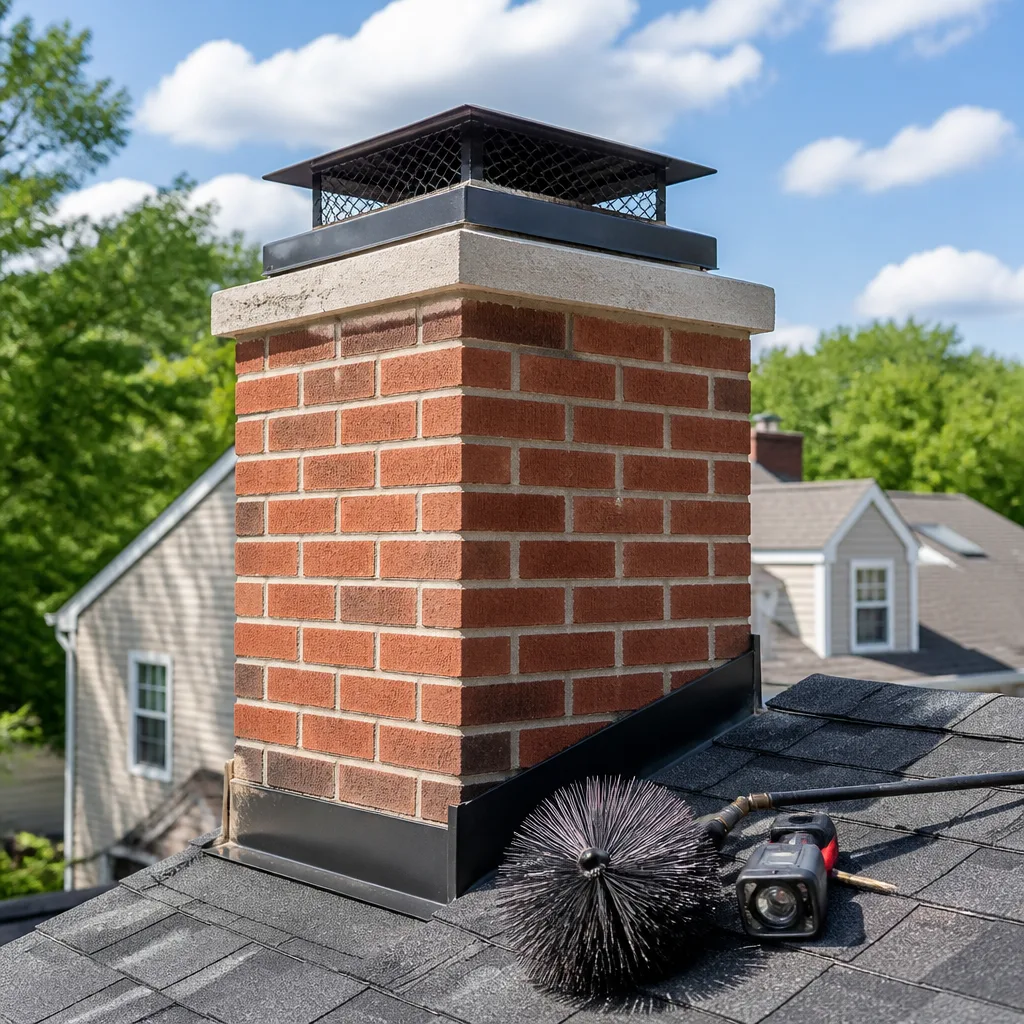
Level 1 sweep and inspection to the NFPA 211 annual standard - flue, crown, cap, and flashing checked and photographed
Chimney sweep logs do not sweep chimneys. They loosen some creosote - which then falls where a brush and vacuum still have to collect it.
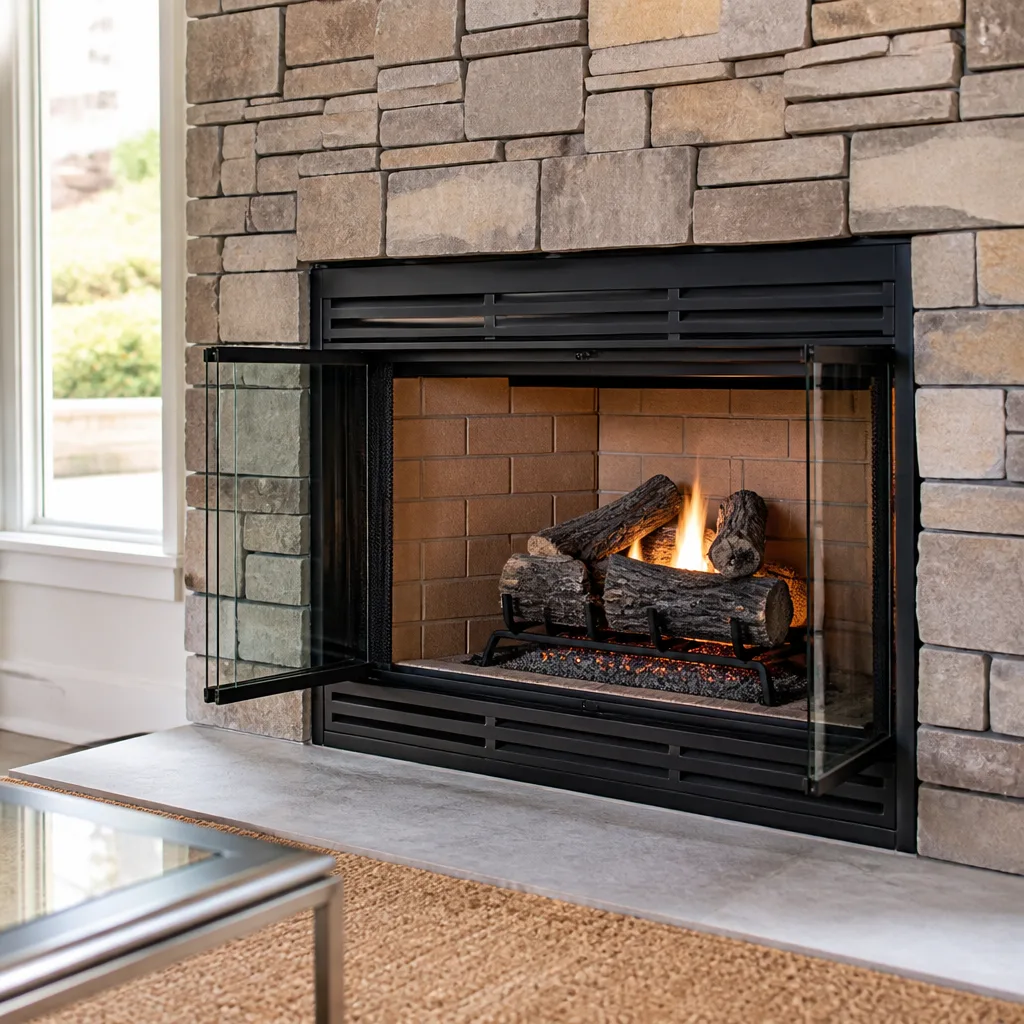
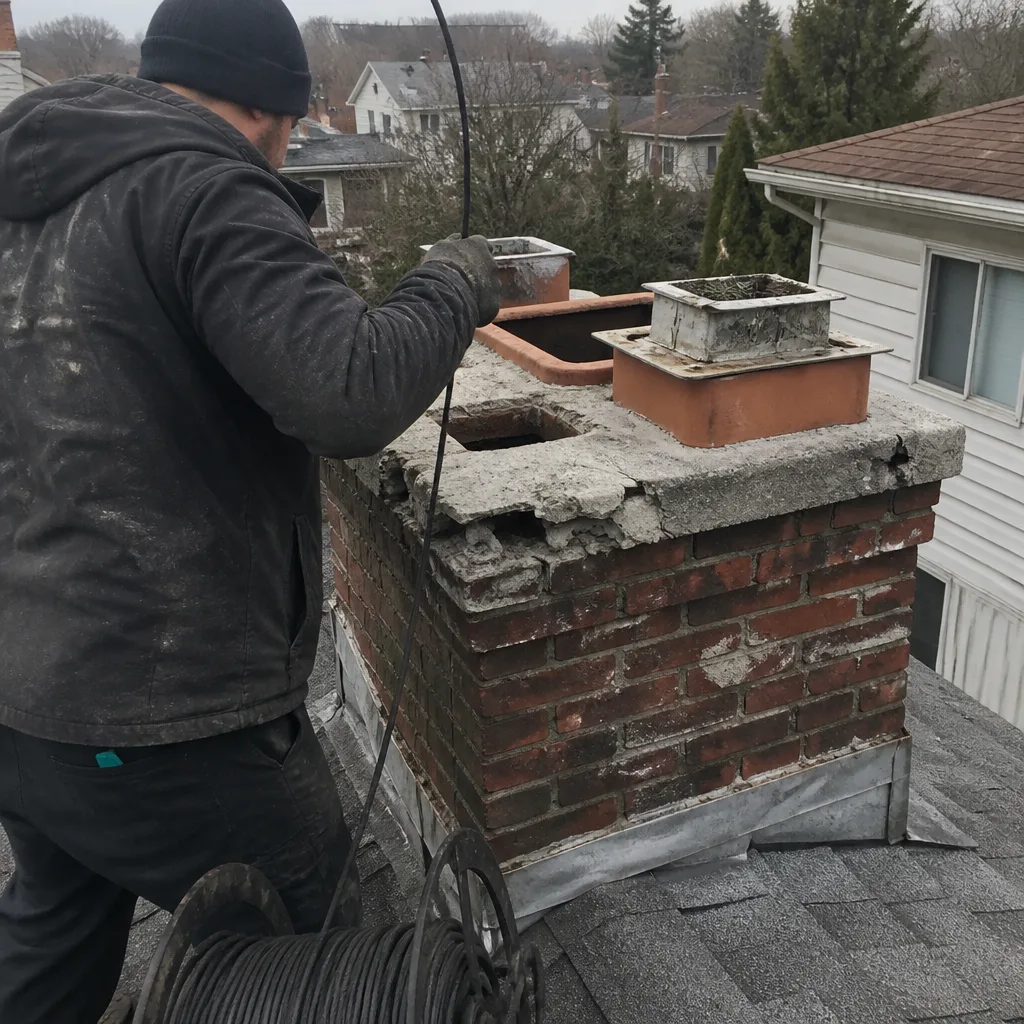 Before
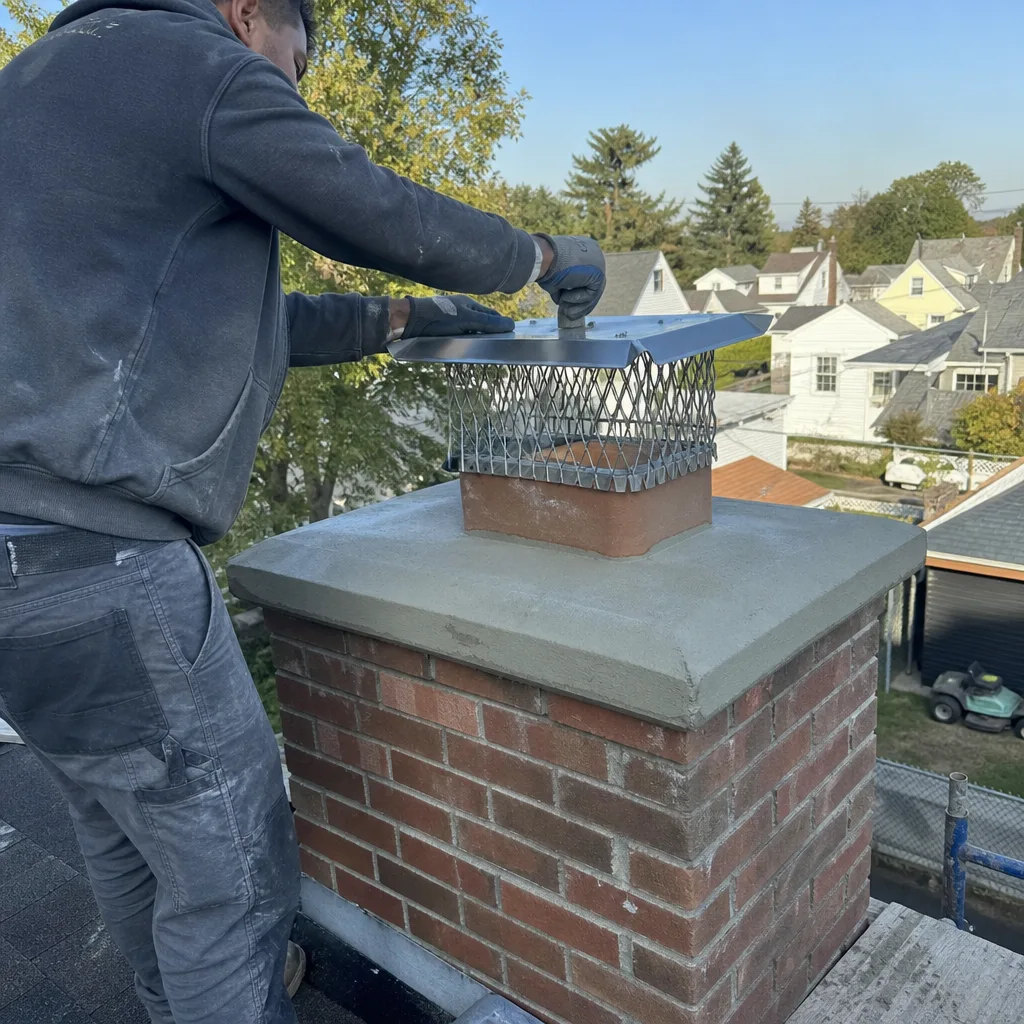 After
After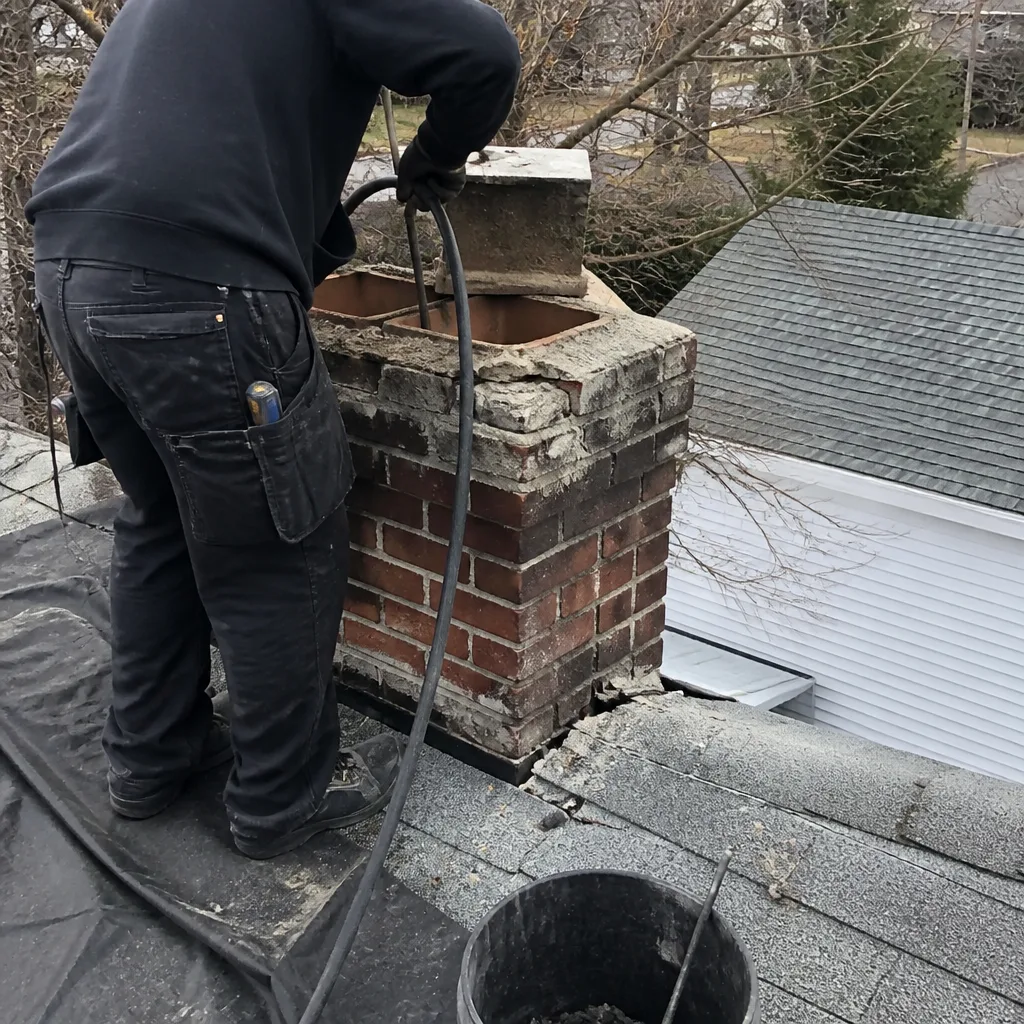 Before
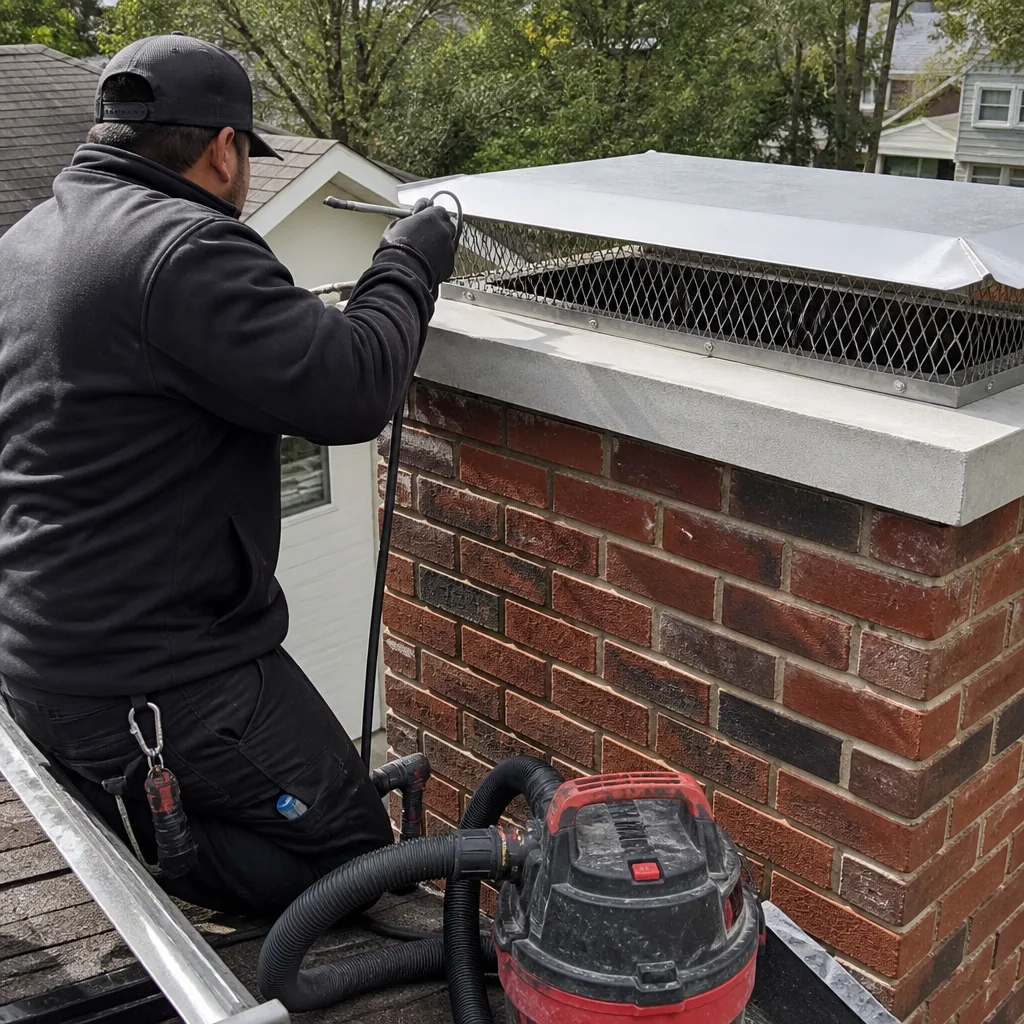 After
After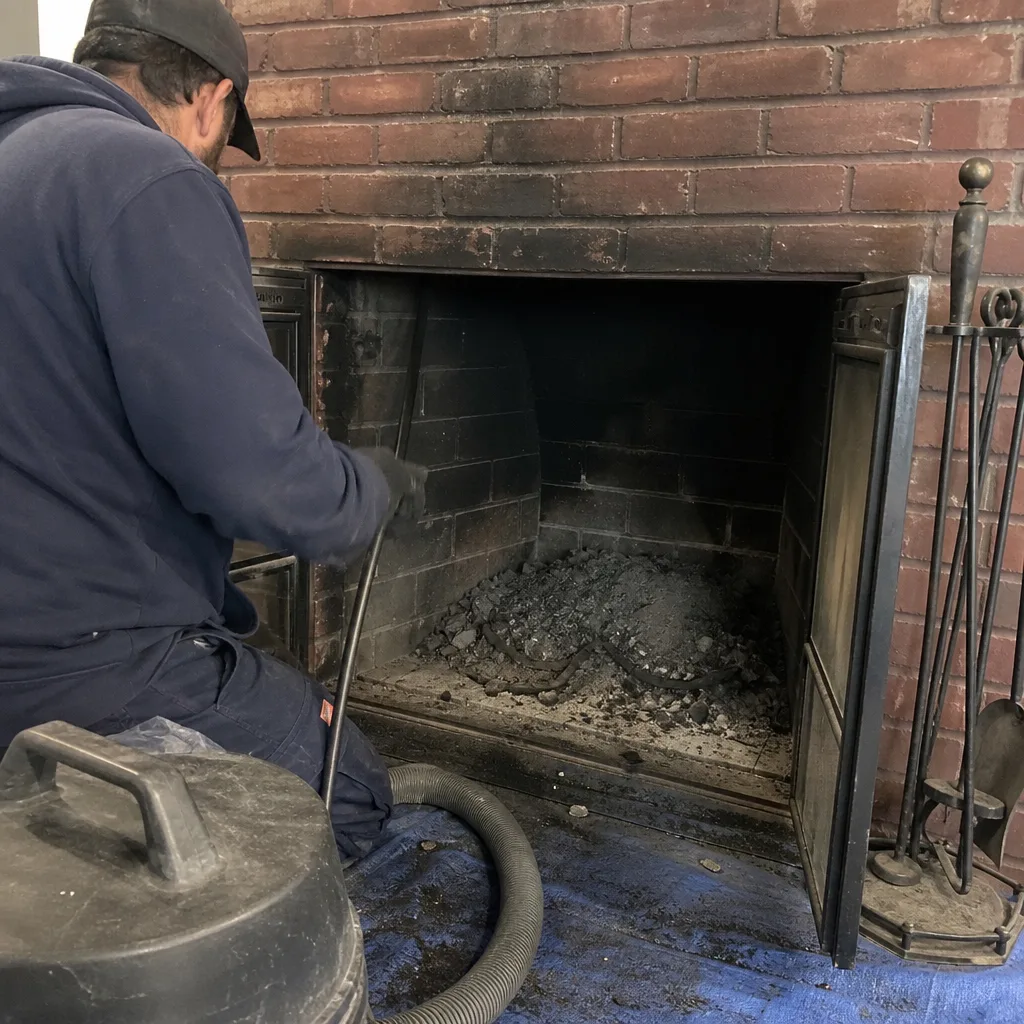 Before
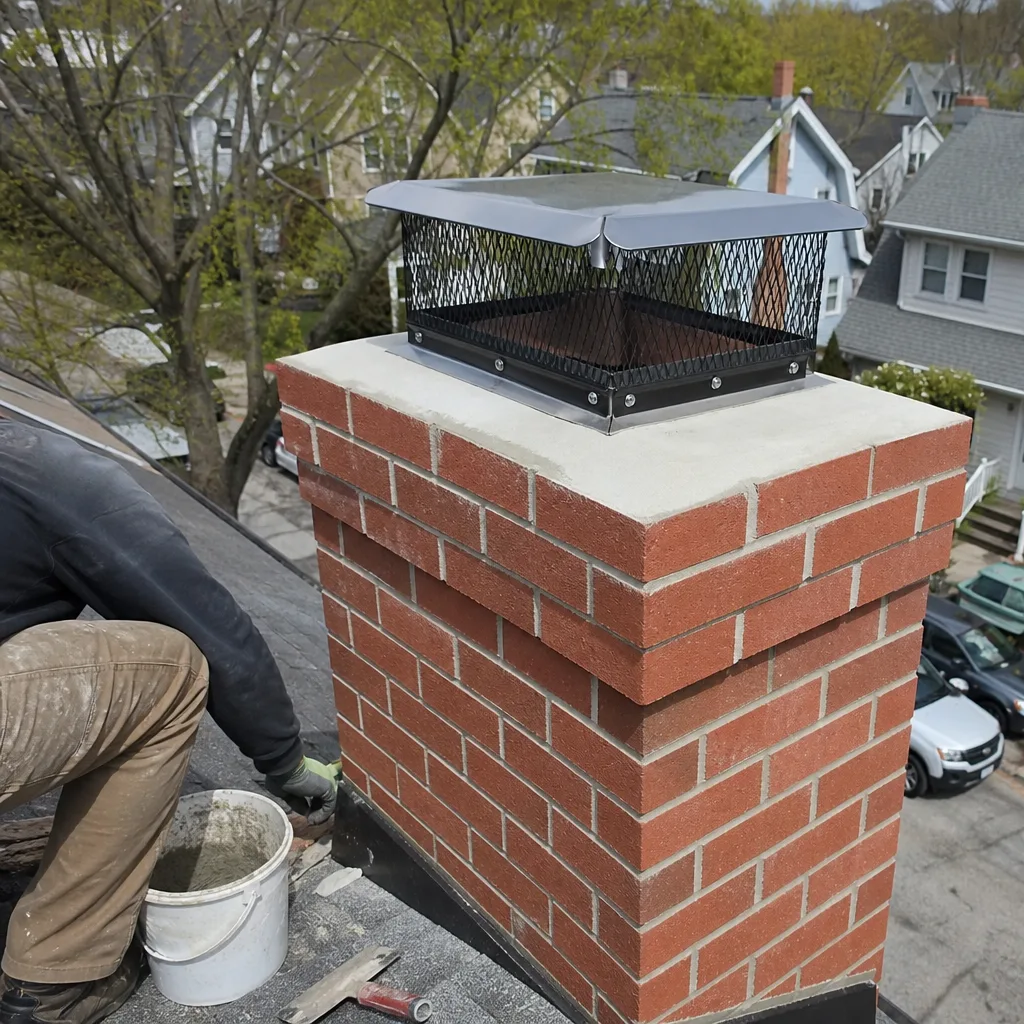 After
AfterCreosote Removal in Flushing, NY
Creosote removal in Flushing typically runs between $150 and $600 depending on how much buildup is present and which stage of creosote has formed in your flue. Most standard cleaning appointments – where we’re dealing with Stage 1 or light Stage 2 buildup – are finished in a single visit. Heavier glazed deposits require chemical treatments and additional labor, but we’ll tell you exactly what we’re looking at before any work begins.
If you’ve been using your fireplace for a few seasons without Fireplace Cleaning, there’s a reasonable chance creosote has been quietly building up inside your flue liner. That’s not a scare – it’s simply how wood smoke works. Every fire leaves something behind, and over time those residues can become a genuine hazard. We’ve been removing creosote from chimneys across Flushing since 1984, and Russell Haines has built Hearthstone Chimney Co. around one straightforward idea: the job isn’t done until the flue is clean, documented, and safe to use.
This page is part of our broader Chimney Cleaning & Sweep in Flushing service. Call us at (516) 206-6672 – a live person answers every hour of every day – and we’ll schedule a visit that works with your calendar.
What Creosote Is and Why It Builds Up in Flushing Chimneys
Creosote is the byproduct of incomplete combustion. When wood burns and the smoke cools as it travels up the flue, it condenses on the liner walls and leaves behind a carbon-based residue. In Flushing’s climate, that process is accelerated by a few factors that we see repeatedly in this part of Queens.
First, the winters here are damp. Cold, wet air slows the draft in a chimney, which means smoke lingers longer in the flue before it exits. Longer contact time with the liner walls equals more deposition. Second, a lot of the older attached homes in Flushing – particularly the colonial and Tudor-style houses in neighborhoods like Kew Gardens Hills and Murray Hill – have relatively short flue runs compared to freestanding homes with taller chimneys. Shorter flues cool faster and produce more condensation. Third, homeowners who burn green or unseasoned wood (sometimes because it was all that was available at a local hardware store on Francis Lewis Boulevard) deposit creosote at roughly twice the rate of those burning properly seasoned hardwood.
Creosote progresses through three stages, and the stage matters enormously for how we approach the job:
- Stage 1 (Flaky, sooty deposits): Light and dry, this brushes out cleanly with standard chimney brush equipment. This is what most annual cleanings address. If you’re getting your chimney swept every year, this is typically all we find.
- Stage 2 (Tar-like, crunchy buildup): Harder and more porous, this stage has a higher ignition temperature and doesn’t brush out as easily. It usually requires rotary cleaning equipment and, in moderate cases, a chemical treatment to loosen the deposits before mechanical removal.
- Stage 3 (Glazed creosote): This is the difficult one. Shiny, hard, and dense, glazed creosote coats the liner like a lacquer and is resistant to brush cleaning entirely. Chemical crumblers – professional-grade products applied to the flue walls – are required to convert it into a removable form before we can extract it. This stage represents a real fire risk and should not be left in a flue.
A chimney fire fueled by Stage 3 glazed creosote burns at temperatures that can exceed 2,000 degrees Fahrenheit. That’s hot enough to crack a clay tile liner, compromise the surrounding masonry, and transfer heat to the wood framing of your home. We don’t say that to alarm you – we say it because it’s the honest reason why creosote removal is not a job to postpone.
When You Need Creosote Removal
You don’t always notice creosote buildup from the living room. These are the signs that tell us – and should tell you – that it’s time to call.
- A strong, oily smoke smell when the fireplace isn’t in use: This is one of the most consistent early signs in Flushing homes, especially during humid summer months when the heat draws odors down through the flue. That smell is creosote vapors, and it means the buildup is present even if you can’t see it.
- Black, flaky debris falling into the firebox: If you’re finding dark flakes or chunks at the bottom of your fireplace, Stage 2 deposits are breaking loose from the liner walls. That debris doesn’t land in your firebox by accident – something is dislodging it.
- Reduced draft or a fire that smokes back into the room: Heavy creosote buildup narrows the usable diameter of the flue and can disrupt the airflow patterns that make a fireplace draw properly. If you’re fighting your fire more than you used to, buildup is a likely cause.
- It’s been more than twelve months since your last sweep: The Chimney Safety Institute of America (CSIA) and the National Fire Protection Association both recommend at least one annual inspection and cleaning. Flushing homeowners who use their fireplace regularly through the heating season – roughly October through March – should treat this as a firm annual appointment, not a loose suggestion.
- You’ve recently moved into an older home: Flushing has a substantial stock of homes built between the 1920s and 1960s. If you purchased one of those properties and can’t verify the last time the chimney was cleaned, assume it needs attention. We’ve opened flues in homes near downtown Flushing and found Stage 2 or Stage 3 buildup with no cleaning records going back ten or more years.
- You burned green, wet, or resinous wood last season: Softwoods and unseasoned hardwoods produce significantly more creosote per fire than dry hardwoods like oak or hickory. If that was your fuel source last winter, the flue likely has more buildup than a typical season would produce.
Our Creosote Removal Process
Every Chimney Cleaning & Sweep services appointment follows the same sequence. There are no shortcuts and no steps we skip because the job looks routine. The flue doesn’t advertise what it’s hiding until we look inside, and the only way to look inside properly is to do it correctly from the start.
- Arrival and setup: Our technician arrives in uniform and on time. Drop cloths go down before anything else is touched. The firebox, hearth, and surrounding area are protected. We introduce ourselves to the homeowner, confirm what’s been scheduled, and do a quick walk-through of the fireplace and surrounding area before opening anything up.
- Level-2 camera inspection: Before any cleaning begins, we run a camera up the flue and document the liner condition from bottom to top. You’ll see the footage on a screen, and we’ll explain in plain English what we’re looking at – the stage of creosote present, any liner cracks or damage, cap condition, and anything else that warrants attention. This step is what separates a real inspection from a sweeping service that guesses. The photos are yours to keep.
- Mechanical cleaning: For Stage 1 and moderate Stage 2 deposits, we use professional rotary brush equipment and hand tools to break up and remove the buildup from the liner walls. The firebox is vacuumed as we work. Most of a standard appointment is spent here – thorough mechanical cleaning takes time and attention to detail.
- Chemical treatment where needed: If Stage 2 deposits are heavy or Stage 3 glazed creosote is present, we apply professional-grade chemical crumblers before attempting further mechanical cleaning. These products – sourced from the same supply chain we use for all our professional materials – convert hard deposits into a more porous, removable form. We schedule a follow-up visit to complete the extraction after the treatment has had time to work, and we’ll explain the timeline clearly before we leave.
- Post-cleaning inspection and documentation: After cleaning, we run the camera again and show you the before-and-after comparison. If any liner damage was found – cracked tiles, deteriorated mortar joints, gaps in the flue – we document it in writing and give you a plain-English verdict on what it means and what, if anything, needs to be repaired. A liner that holds glazed creosote for years can sometimes have underlying damage worth addressing with HeatShield or a DuraFlex liner system.
- Cleanup and final walkthrough: The work area is cleaned as carefully as we found it. Before we leave, we go over findings with the homeowner and answer any questions. The estimate number on the way in is the invoice number on the way out – no surprises.
Creosote Removal Pricing in Flushing
Creosote removal in Flushing costs more or less depending on three things: the stage of creosote, the height and configuration of your flue, and whether any materials or follow-up visits are required. Below are honest ranges based on what we typically see in this market.
| Service | Typical Price Range (Flushing) |
|---|---|
| Standard annual cleaning (Stage 1 creosote) | $150 – $250 |
| Heavy Stage 2 removal with rotary equipment | $250 – $400 |
| Stage 3 glazed creosote – chemical treatment plus extraction (may require two visits) | $400 – $600+ |
| Level-2 camera inspection (included with cleaning, or standalone) | $99 – $175 |
| $89 Seasonal Tune-Up (cleaning plus basic inspection) | $89 |
These ranges reflect actual Flushing-area pricing. They will vary based on flue height, access, and the condition we find on camera. If a second visit is needed for Stage 3 treatment – which we’ll know within the first appointment – we’ll give you a firm price before that visit is scheduled. The number on the estimate is the number on the invoice. That’s not a sales line; it’s how we’ve operated for over 42 years.
If you’ve received a written estimate from another company and want a second set of eyes, our Free Second Opinion is there for exactly that reason. Call (516) 206-6672 and we’ll come look at what you were quoted.
Current offers that may apply to your appointment:
- $50 Off Any Repair Over $250 – applies when creosote damage leads to a repair estimate
- 5% Senior and Veteran discount – permanent, no expiration
- $89 Seasonal Tune-Up – cleaning and basic inspection, available year-round
FAQs – Creosote Removal in Flushing
How do I know what stage of creosote is in my chimney?
You can’t tell from the firebox – the flue has to be inspected with a camera to see what’s actually on the liner walls. Stage 1 looks like gray or black soot dust. Stage 2 looks like a dark, crunchy, tar-like coating. Stage 3 is shiny and hard, almost like a lacquered surface. Our Level 2 Inspection shows you exactly what’s present and where, and we’ll explain it in plain English before we start any work. Call (516) 206-6672 to schedule an inspection – estimates are free.
Is creosote removal in Flushing a job I can do myself?
Stage 1 light soot can be brushed out by a careful homeowner using the right chimney brush kit, but we’d still recommend a Level 1 Inspection first so you know what you’re dealing with. Stage 2 and Stage 3 creosote should be handled by a trained sweep. The chemical agents used on glazed creosote require proper handling, the deposits themselves are a fire hazard when disturbed without containment, and the inspection step – which is the part that identifies liner cracks or structural problems – cannot be done effectively without camera equipment. If you’re uncertain where your flue falls, one call to (516) 206-6672 answers the question for free.
How often should Flushing homeowners have creosote removed?
Once per year is the standard recommendation for any household that uses a wood-burning fireplace regularly. In Flushing specifically, we’d add: if you’re burning more than two to three cords of wood per season, or if your wood is even slightly green, schedule a mid-season check as well. The damp winters here and the shorter flue runs common in Queens’ attached housing stock mean buildup accumulates faster than homeowners often expect. An annual cleaning keeps Stage 1 deposits from advancing to Stage 2, which is where the job gets harder and the price goes up.
What does the 90-Day Done Right Promise cover for creosote removal?
It covers the work we performed, in writing, with no arguing. If you call within 90 days of your appointment and believe the cleaning wasn’t done correctly – if there’s residual buildup we should have caught, if a treatment didn’t perform as expected, if something we said was addressed still isn’t right – we come back and make it right at no additional charge. That promise is part of every job we do, and it’s backed in writing. Russell Haines has run this business for over 42 years on that standard, and it’s not something we’ve ever had to explain twice to a satisfied customer.
Why Flushing Homeowners Call Hearthstone Chimney Co.
There’s no shortage of chimney services operating in Queens. What there is a shortage of is consistency – companies that show up when they say they will, document what they find, charge what they quoted, and stand behind the work after the truck leaves the driveway.
Hearthstone has been doing this in and around Flushing since 1984. Russell Haines built the company on four operating principles collected under the K.E.Y.S. values code: Krafted right, Every time, Your home first, Standing behind it. Those aren’t words on a website – they’re the standard every technician on our crew is held to on every job. Background-checked, uniformed, and trained to document findings with a camera rather than guess at them.
We use professional-grade materials – Olympia Chimney products, HeatShield for liner restorations, DuraFlex flexible liner systems where new liner work is needed – because builder-grade materials have no place in a job we’re backing with a written 90-day guarantee. The materials have to be right or the guarantee means nothing.
Flushing’s housing stock includes a lot of older fireplaces that haven’t been serviced in years. We know the neighborhoods – from the Tudor-style homes near Kissena Park to the older colonials off Northern Boulevard – and we know what those flues typically look like when we open them up. That local knowledge matters. It’s the difference between a sweep who treats every chimney the same and one who knows what to look for given the age, style, and usage history of your specific home.
If you want to read more about our full cleaning and inspection service, the Hearthstone Chimney Co. home page covers the complete picture of what we do and how we work.
Schedule Your Creosote Removal in Flushing
If your fireplace hasn’t been swept in the last twelve months – or if you’ve noticed any of the signs described above – the right move is a camera inspection and cleaning before the heating season is in full swing. We’ll tell you exactly what’s in the flue, what stage the creosote has reached, and what it will cost to address it. No pressure, no upsell, no number on the invoice that didn’t appear on the estimate.
Call (516) 206-6672 to schedule. A live person will answer – not a voicemail, not a callback queue. We serve Flushing and the surrounding Queens communities, and most appointments are completed in a single visit. If the work qualifies for our $50 Off Any Repair Over $250 or the 5% Senior and Veteran discount, we’ll apply it without you having to ask.
The job done right, in writing, backed for 90 days. That’s the Hearthstone standard – and it has been since 1984.
Written by Russell Haines, Owner at Hearthstone Chimney Co., serving Flushing since 1984.